
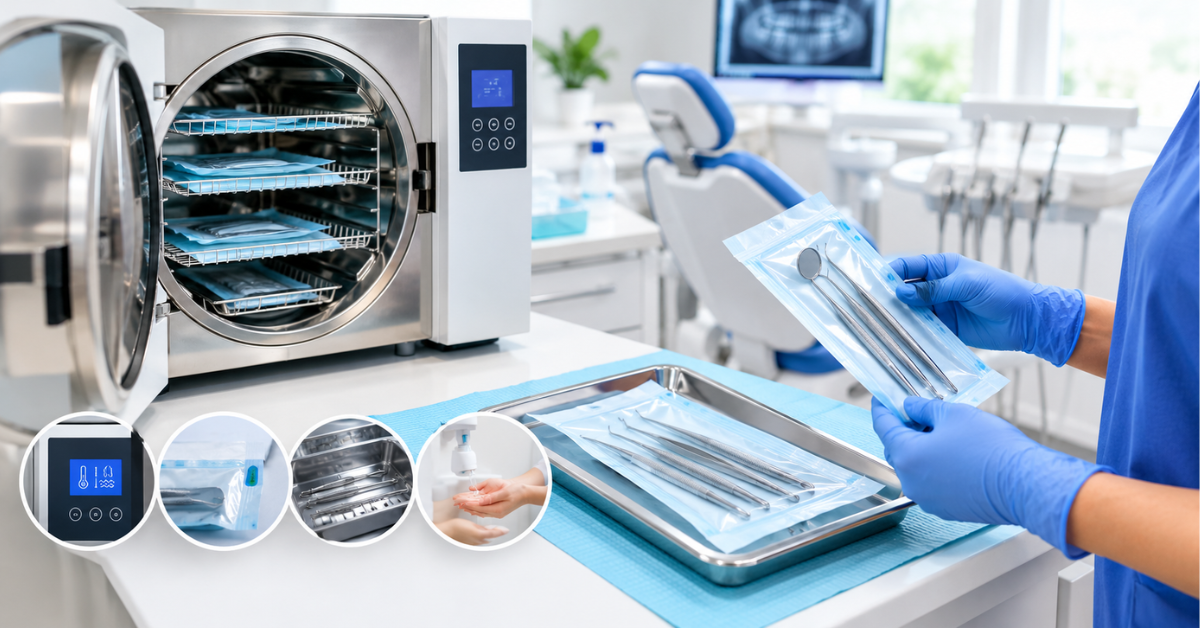
Infection prevention is an essential part of safe dental care. Dental instruments and treatment surfaces may come into contact with saliva, blood, and oral tissues, making proper hygiene procedures important. Understanding how cleaning, disinfection, and sterilization work can help patients make informed decisions when choosing a dental clinic.
Why Is Sterilization Important In Dental Clinics?
Dental instruments can carry microorganisms if they are not processed correctly. Appropriate infection-control practices help reduce the risk of infections spreading between patients and dental staff.
These three processes serve different purposes:
- Cleaning: Removes visible dirt, debris, and organic material from instruments or surfaces.
- Disinfection: Reduces or eliminates many harmful microorganisms on suitable surfaces.
- Sterilization: Eliminates all forms of microbial life, including bacterial spores, from instruments through a validated process.
What Should Patients Observe Before Treatment?
Patients can look for practical signs of good hygiene, including:
- Clean dental chairs and treatment areas.
- Proper hand hygiene by dental staff.
- Fresh gloves for each patient when indicated.
- Appropriate masks and protective equipment.
- Clean instruments opened from intact sterile packages before use.
However, appearance alone cannot confirm that instruments have been properly sterilized. Patients should consider both visible hygiene and the clinic’s infection-control procedures.
How Are Dental Instruments Properly Sterilized?
Reusable dental instruments should be cleaned thoroughly before sterilization. Heat-compatible instruments are commonly sterilized using an autoclave, which uses pressurized steam under controlled conditions.
Correct packaging, suitable sterilization cycles, equipment maintenance, and monitoring are essential. Chemical indicators and appropriate biological monitoring help assess whether the sterilization process is functioning as intended. Equipment must be operated correctly; simply having an autoclave does not guarantee effective sterilization.
What About Dental Chairs And Other Surfaces?
Dental chairs, worktops, and frequently touched surfaces should be cleaned and disinfected between patients using suitable products and procedures. Protective barriers may be placed over selected surfaces and replaced after each patient.
Environmental surfaces require cleaning and disinfection, while reusable instruments that enter the mouth may require sterilization. These processes are different and should not be substituted for one another.
What Questions Can Patients Ask Their Dentist?
Patients can respectfully ask:
- How are reusable dental instruments cleaned and sterilized?
- Are instruments opened from sterile packages before treatment?
- How are dental chairs and work surfaces disinfected between patients?
- How is sterilization equipment monitored and maintained?
Asking these questions is reasonable. Not seeing every step does not automatically mean a clinic follows unsafe practices.
When choosing a clinic, consider infection-control procedures alongside professional qualifications, clear communication, and the overall quality of care. Patients searching for a good dentist in indore can ask about sterilization practices before treatment to better understand the clinic’s approach to hygiene and patient safety.
FAQs
1. How do dental clinics sterilize reusable instruments?
Reusable instruments are cleaned thoroughly and then processed using a validated sterilization method appropriate for the instrument, commonly steam sterilization.
2. Is an autoclave commonly used for dental instrument sterilization?
Yes. Autoclaves use pressurized steam and controlled conditions to sterilize compatible instruments when operated and monitored correctly.
3. Should dental instruments be opened from sterile packages before treatment?
Yes. Sterile packages should remain intact until use, and instruments should be opened appropriately before treatment.
4. How should dental chairs and surfaces be cleaned between patients?
Surfaces should be cleaned and disinfected using appropriate products and procedures. Protective barriers should be replaced between patients when used.
5. Can patients ask a dentist about sterilization and infection-control procedures?
Yes. Patients can ask how instruments are processed, how surfaces are disinfected, and how sterilization equipment is monitored.