

 Vikas Singh Gurjar
My experience was very good … very well taken care of .Thank u Dr Anjaly , Dr Vatsal, Deepak , Ganesh , Vishnu and Gopal for your services.
View on GoogleHome » Implant-Supported Dental Bridges in Indore
Care led by Dr. Ashish Jain
Precise, planned implant placement
3D scans under one roof
Digital, painless dentistry
Smile Dental Clinic, Indore, provides implant-supported bridges under the care of Dr. Ashish Jain, Managing Director, Dental Surgeon and Implantologist. The aim of this page is to explain how such a bridge is built, when it makes more sense than the alternatives, what treatment feels like from the patient’s chair, and how to look after the bridge once it is in place.
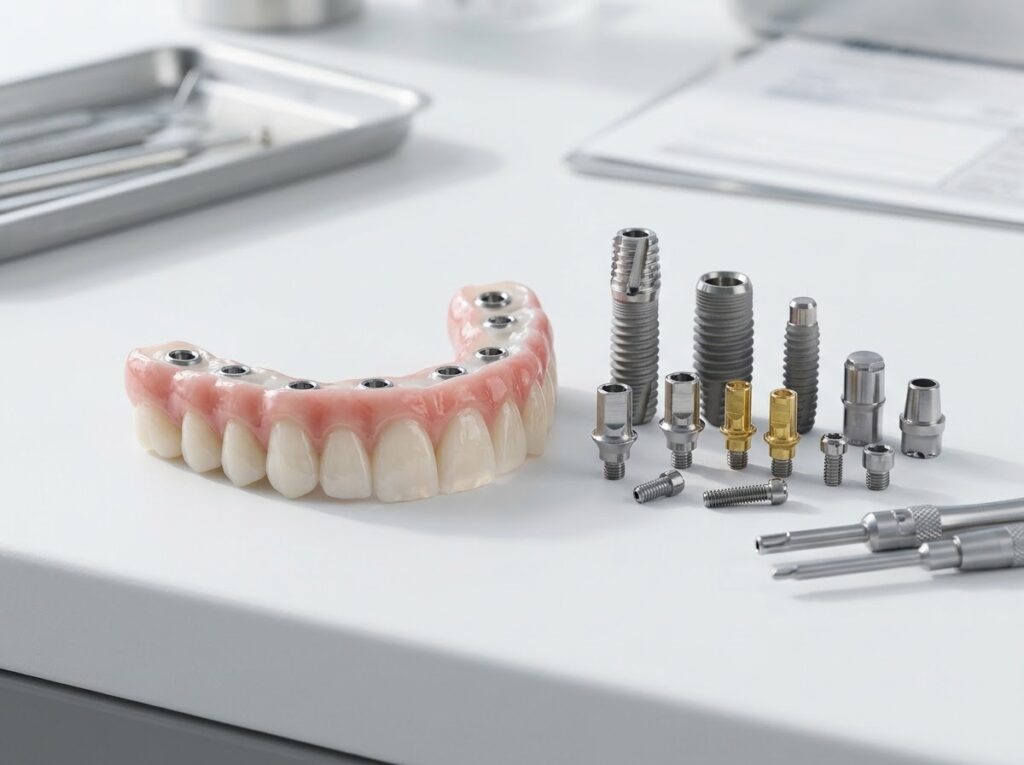
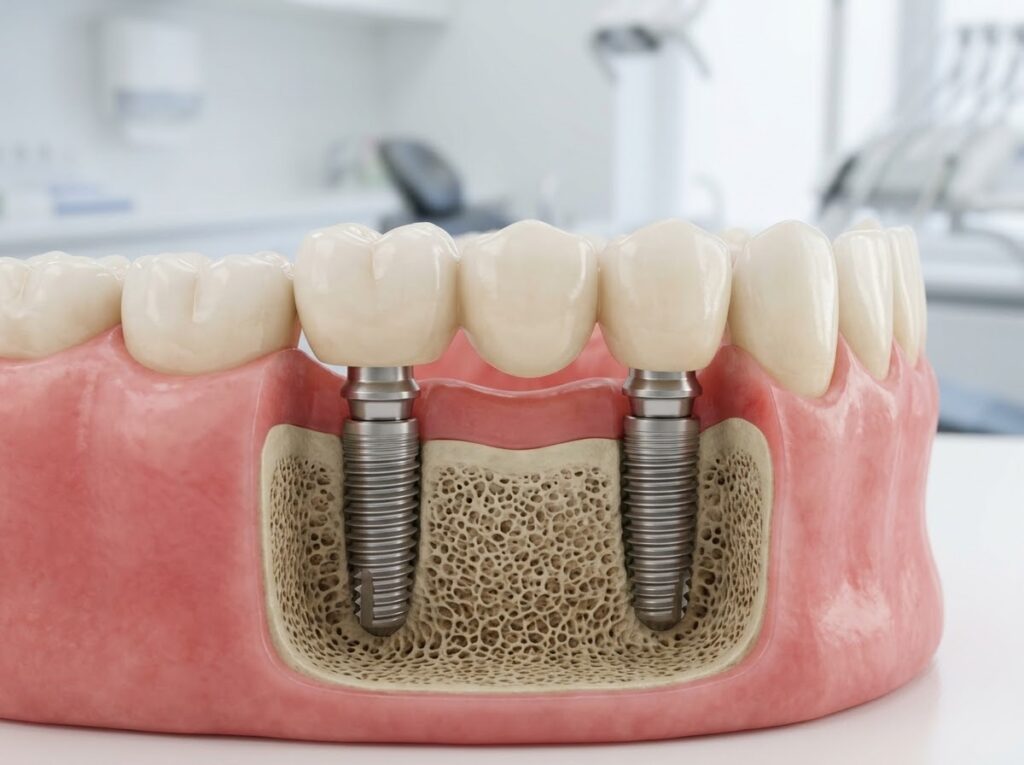
Definition: An implant-supported dental bridge is a fixed row of artificial teeth carried by two or more dental implants instead of by natural teeth. The implants act as pillars; the teeth between them, called pontics, span the gap. It is used when several adjacent teeth are missing.
| Feature | Details |
|---|---|
| Replaces | Usually three or more neighbouring teeth; sometimes two |
| Supported by | Dental implants – commonly two for a three- or four-tooth span |
| Natural teeth trimmed? | No |
| Removable? | No – fixed by screws or dental cement; removable only by the dentist |
| Usual materials | Zirconia or porcelain fused to metal |
| Treatment time | Several months including healing |
| Daily care | Brushing plus cleaning beneath the bridge |
| Cost | Depends on span, implants and material |
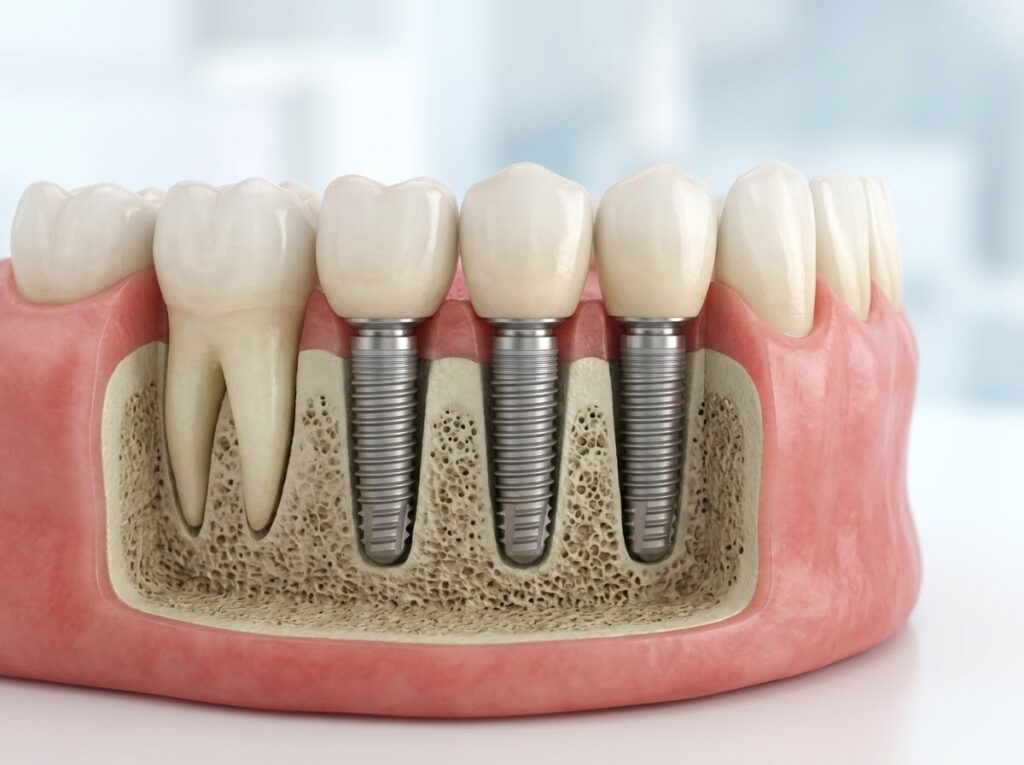
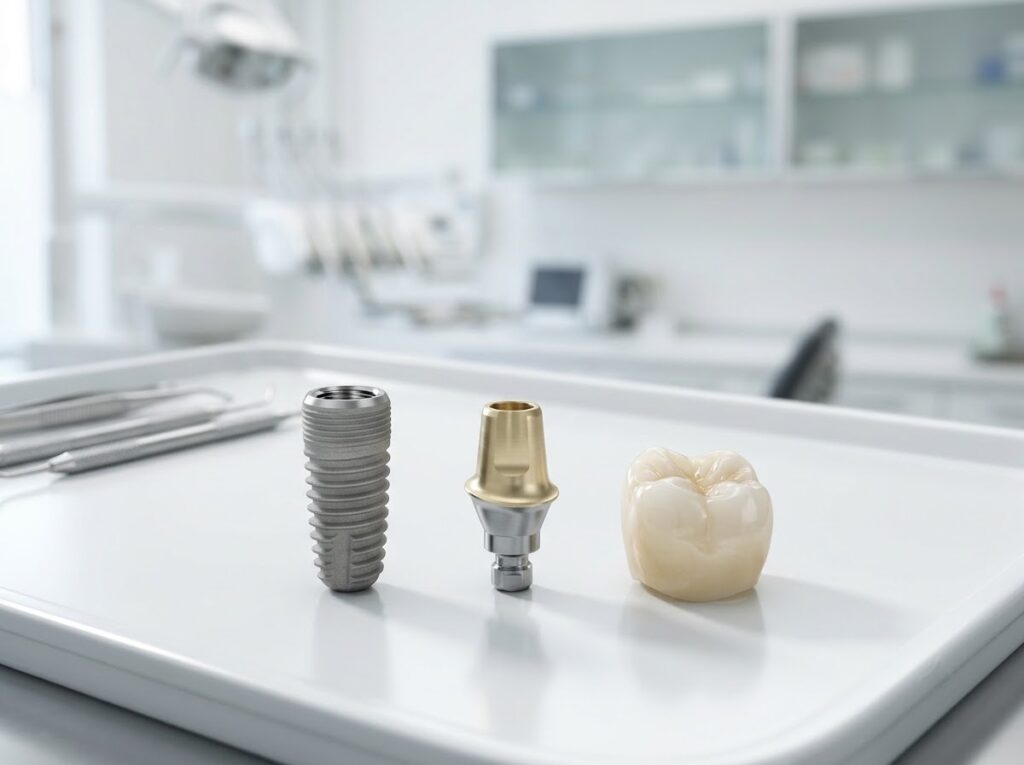
The word “bridge” in dentistry means exactly what it does in engineering: a structure that crosses a gap, held up at its ends. In a conventional dental bridge, the ends are natural teeth that have been reduced in size and covered with crowns. In an implant-supported bridge, the ends are implants – artificial roots placed in the jawbone.
Because the supports are new, purpose-placed pillars rather than existing teeth, an implant bridge can be built in places where a conventional bridge is impossible, such as at the very back of the mouth where there is no tooth behind the gap. It also spares the neighbouring teeth from being cut.
An implant bridge should be distinguished from two related treatments. Individual implant crowns place one implant under every missing tooth. A full-arch prosthesis replaces every tooth in a jaw. The implant bridge occupies the middle ground: a section of the arch, several teeth long, carried by fewer implants than teeth.
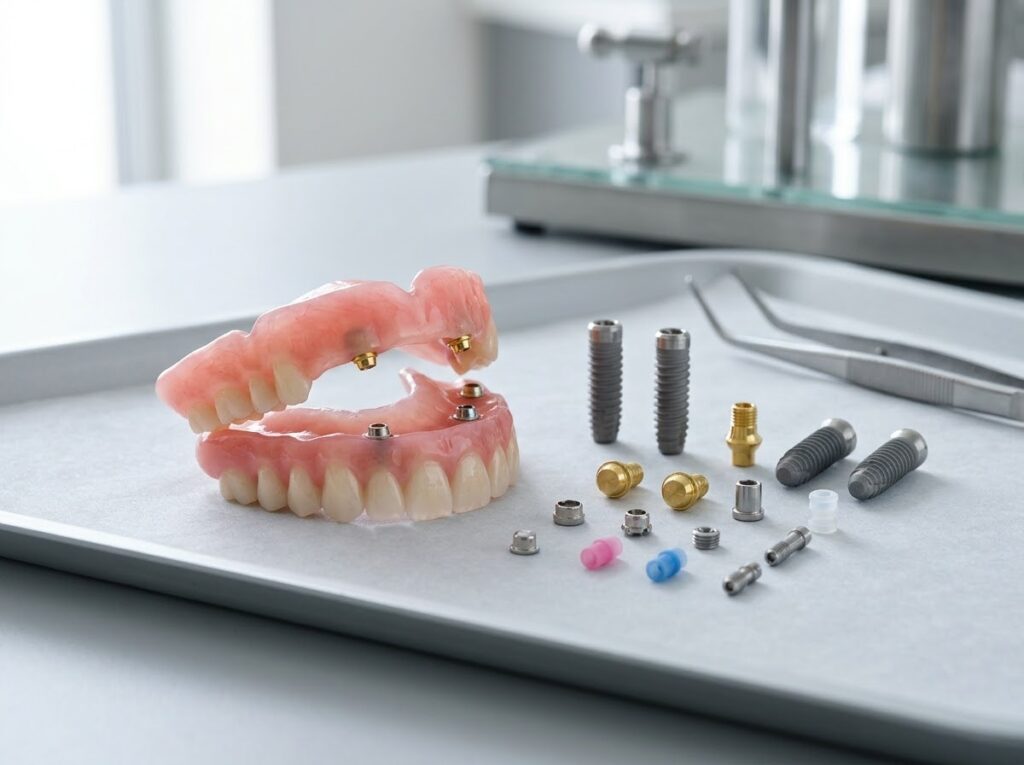
Knowing the vocabulary makes your consultation easier to follow.
A typical “three-unit” implant bridge therefore consists of two retainers on two implants with one pontic between them. A “four-unit” bridge has two pontics.
A run of missing teeth leaves a longer unsupported stretch of jaw than a single gap does, and the consequences are correspondingly greater.
Replacing the teeth restores chewing balance and helps hold the neighbouring and opposing teeth in their positions.

Adjacent teeth are often lost together for a shared reason:
Identifying the cause allows it to be addressed, so the new bridge is not exposed to the same threat.
An implant-supported bridge is commonly considered when:
This is the central decision for most patients. Each approach has genuine strengths.
| Consideration | Implant-Supported Bridge | Conventional Tooth-Supported Bridge | Individual Implant Crowns |
|---|---|---|---|
| Effect on neighbouring teeth | None | Requires trimming of support teeth | None |
| Surgery required | Yes | No | Yes – more implant sites |
| Number of implants (three missing teeth) | Usually two | None | Three |
| Works without a rear tooth | Yes | No | Yes |
| Bone preservation | Around the implants | No stimulation under the gap | At every site |
| Cleaning | Under the pontic with special aids | Under the pontic with special aids | Like natural teeth, between each crown |
| If one part fails | Whole bridge may need removal | Support tooth problems can end the bridge | Only the affected unit is involved |
| Treatment time | Months | Weeks | Months |
| Relative initial cost | Moderate to high | Lower | Highest |
If the teeth beside the gap already carry large fillings or crowns and would benefit from being crowned anyway, a conventional bridge may be a sensible, quicker, non-surgical choice. It also remains an option for people who cannot undergo surgery for medical reasons.
Where bone and spacing are generous and the budget allows, separate implants under each tooth make cleaning simpler and keep each tooth independent.
It is often the balanced option: fixed teeth, no damage to neighbours, fewer implants and the ability to bypass a site with poor bone or a nearby nerve or sinus.
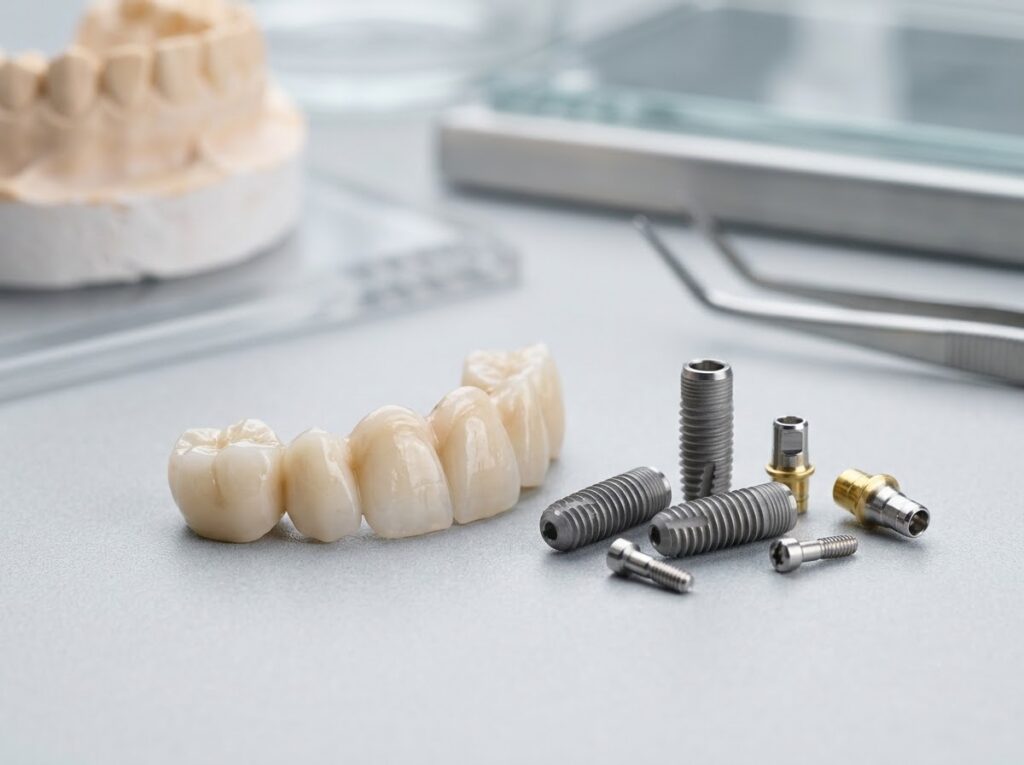
Screw-retained bridges are fastened to the implants with small screws that pass through the biting surface or the inner surface of the bridge. The access holes are sealed with tooth-coloured filling material. The great advantage is retrievability: the dentist can unscrew the bridge for cleaning, inspection or repair without damaging it.
Cement-retained bridges are fixed over the abutments with dental cement, much like a conventional bridge. There are no screw holes, which can be helpful for appearance in front teeth. The drawbacks are that removal is harder and that any excess cement left under the gum can irritate the tissues, so meticulous technique is required.
Your dentist will recommend one or the other based on implant angle, the visibility of the area and the need for future access.
Bridge design follows engineering logic. Longer spans flex more, and greater chewing forces demand more support.
Other influences include the length and diameter of implants the bone can accept, bone density, whether you clench or grind, and what the bridge will bite against. A person whose opposing teeth are a soft-biting denture loads a bridge quite differently from someone with a full set of natural molars.
The dentist will ask how the teeth were lost, what you have tried so far and what you expect from the replacement. Medical conditions, medicines, allergies and habits such as smoking and night-time grinding are recorded.
The length and height of the gap are measured. The gums, the neighbouring teeth and the opposing teeth are checked. The way your jaws close and slide against each other is studied, because the bridge must harmonise with these movements.
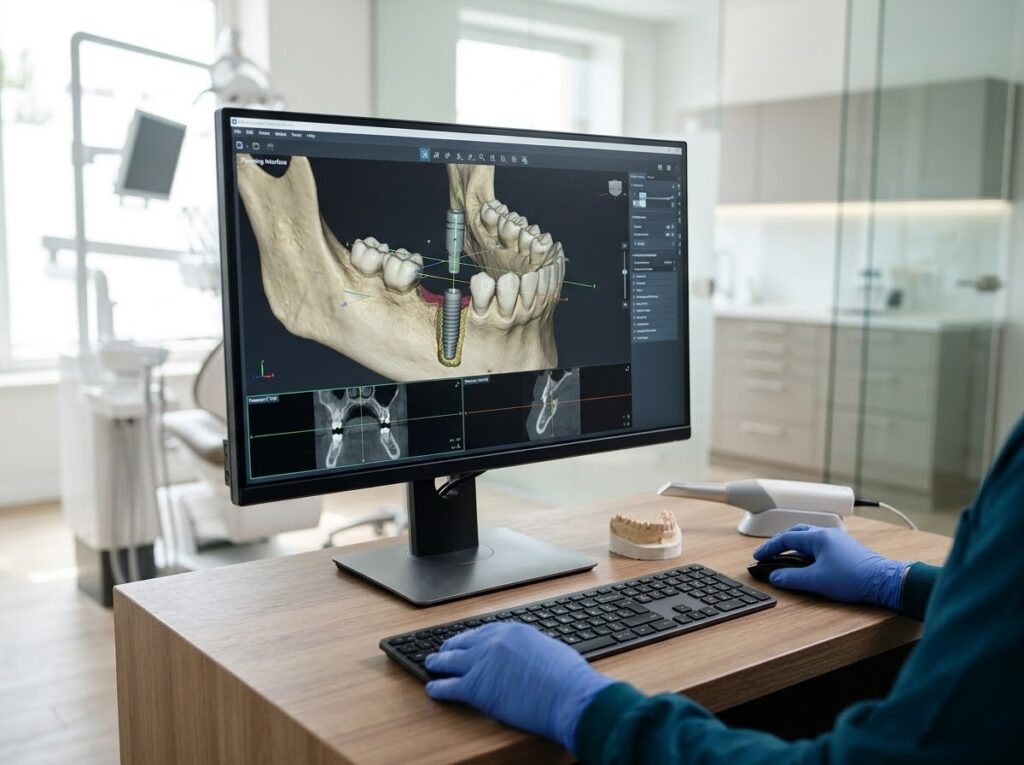
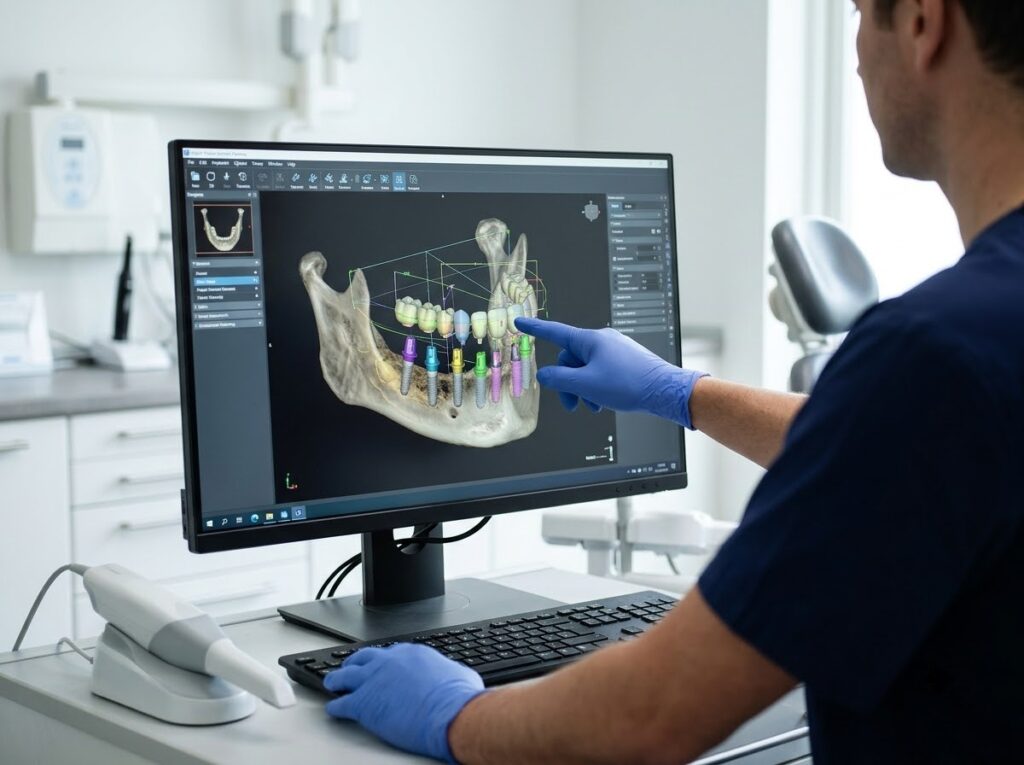
A three-dimensional scan reveals how much bone is present at each potential implant site and locates the nerve canal and sinus. With a bridge, the dentist has some freedom to choose the best two or three sites within the gap – a real advantage where bone is uneven.
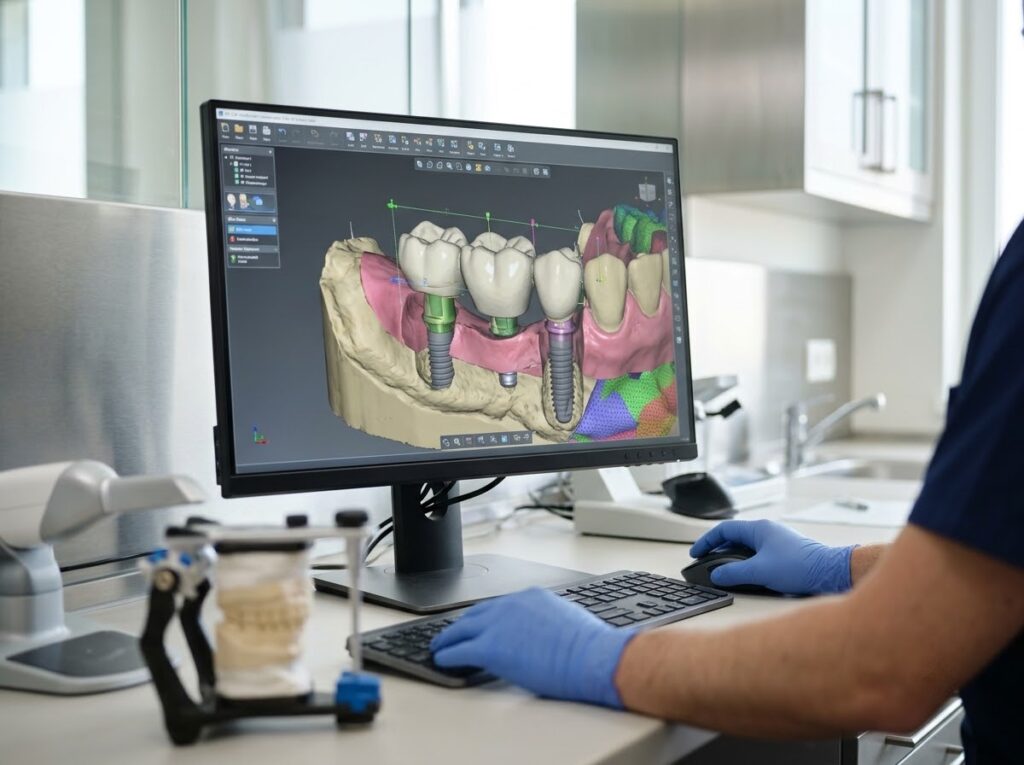
Study models or digital scans are used to design the proposed bridge in wax or on screen before any surgery. The implant positions are then chosen to suit that design, so the screw channels emerge in favourable places and the teeth are correctly shaped.
You should leave the planning stage knowing the number of implants, whether any grafting is foreseen, how the bridge will be attached, the material, the timeline and the costs.
In these situations another solution – or preparatory treatment first – will be suggested.
Every stage is planned around your scans, your bone and the final teeth you need.
Any required extractions, gum treatment or fillings are completed. If the ridge needs building up, grafting is carried out and allowed to mature.
Under local anaesthesia, the implants are inserted at the planned positions. For a bridge it is important that they are reasonably parallel and correctly spaced, so a guide may be used. The gum is closed and the area is left to heal.
The bone bonds to the implants over roughly three to six months. A temporary replacement can fill the gap during this time.
Healing caps or a provisional bridge mould the gum into natural-looking contours, including gentle hollows where the pontics will rest.
The exact three-dimensional relationship between the implants is recorded. Precision here is critical, because a one-piece bridge must seat on all implants simultaneously without strain.
For longer bridges, the bare framework is tried in the mouth first to confirm that it sits passively – that is, without being forced. An X-ray may be taken to check the fit.
Shape, shade, contact with neighbouring teeth and the bite are verified. You see the result and can comment before final fixing.
The bridge is screwed or cemented into position. Screws are tightened to the manufacturer's recommended value, access holes are sealed and the bite is fine-tuned.
You are shown how to clean under the bridge, and a review is arranged after a short period to recheck the screws and gums.
Implant placement for a bridge involves a limited area and is routinely performed with local anaesthesia. The later prosthetic visits – impressions, try-ins and fitting – are usually painless and often need no injection at all. If dental anxiety is a concern, raise it early so that suitable arrangements can be discussed.
Two technical points deserve explanation because they strongly influence how long a bridge lasts.
Natural teeth can shift microscopically to accommodate a slightly imperfect bridge. Implants cannot; they are locked in bone. If a bridge does not match the implant positions exactly, tightening it creates constant tension in the screws, the framework and the bone. Careful impression technique, verification steps and quality laboratory work are the safeguards.
Occlusion means the way teeth meet. Implants do not have the cushioning ligament that surrounds natural roots, so an implant bridge is adjusted to share biting forces evenly and to avoid heavy sideways contacts. This adjustment is rechecked at review visits, since natural teeth continue to move slightly over the years while implants stay still.
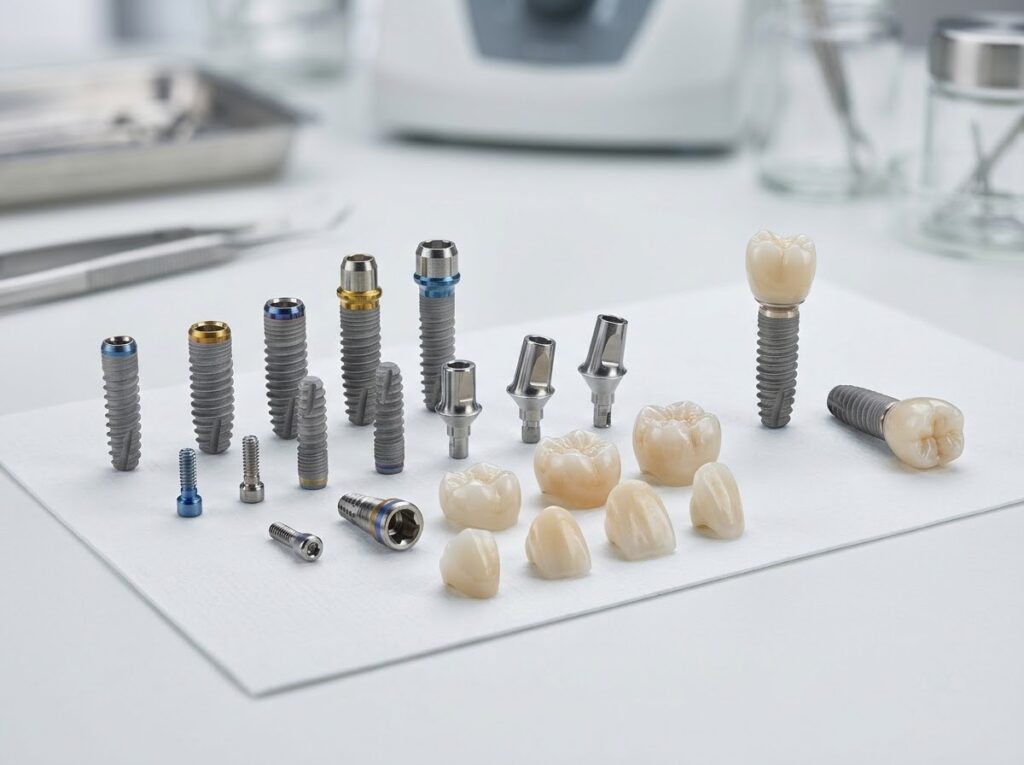
One practical merit of the bridge concept is flexibility. If the scan shows good bone at the two ends of the gap but a defect in the middle, implants can be positioned at the ends and the deficient area simply spanned by a pontic – potentially avoiding a graft. Where bone is lacking at the support sites themselves, ridge augmentation or a sinus lift may still be necessary. Minor soft-tissue grafting is occasionally suggested under pontics in visible areas so the false teeth appear to emerge naturally from the gum.
Why patients choose implant treatment over removable options.
No enamel is removed from neighbours.
Less surgery and lower cost than one implant per tooth.
It does not come out and does not rely on clasps.
Implants can be sited where bone is best.
Suitable for end-of-arch gaps.
Functional loading helps preserve bone there.
Joined units distribute forces across the implants.
Can be removed by the dentist for maintenance.
Surgical risks are those of any implant procedure: infection, bleeding, swelling, nerve disturbance, sinus involvement and failure of an implant to integrate. Risks more specific to bridges include:
Understanding these points helps you weigh the bridge against individual implants and to recognise early warning signs.
| Stage | Typical Experience |
|---|---|
| Evening of surgery | Numbness fades; take pain relief as prescribed; soft cool diet |
| Next two to three days | Mild to moderate swelling; ice packs help |
| End of first week | Comfort returns; normal routine for most people |
| One to two weeks | Suture removal and site check |
| Following months | Quiet healing; temporary teeth in use; periodic checks |
During this period, avoid chewing hard food directly over the implant sites, keep the area clean as shown, and report anything unusual such as increasing pain or discharge.
A new bridge can feel slightly bulky for a few days, and your tongue will explore it constantly. This passes. Start with softer foods on that side and progress to your normal diet over a week or so. If the bridge feels “high”, if you hear a click, or if food packs in one particular spot at every meal, return for an adjustment rather than waiting.
The pontics rest against the gum, and plaque collects in the narrow space beneath them and around each implant. Cleaning that space is the single most important habit for the life of the bridge.
Ask the clinical team to watch your technique at a review visit; small corrections make a large difference.
At review appointments the dentist checks the gums around the implants, measures any pocketing, confirms that the screws are tight and the bite is balanced, and takes X-rays at suitable intervals to monitor bone levels. A screw-retained bridge can be removed for deep cleaning when necessary. The usual recall interval is every six months, or more often for those with a history of gum disease.
Most people resume office work within a day or two of implant placement. Avoid strenuous exercise for several days. Once the bridge is fitted there are few restrictions, but sensible precautions extend its life: do not crack hard nuts or ice with it, do not open bottles or packets with your teeth, wear a sports mouthguard for contact sports and use your night guard if one has been made.
Bruxism – grinding or clenching, often during sleep – is one of the commonest causes of chipped ceramic and loosened screws. Clues include flattened teeth, morning jaw stiffness and a partner hearing grinding sounds. If bruxism is suspected, the bridge may be designed with stronger materials and flatter cusps, an extra implant may be added, and a custom night guard is strongly advised. Wearing it consistently is a small effort that protects a substantial investment.
It helps to think of the implants and the bridge separately. Well-maintained implants in a healthy mouth can remain in service for many years. The bridge on top is a mechanical device exposed to millions of chewing cycles; over time it may need a screw replaced, a chip polished or repaired, or eventually a new bridge on the same implants. Longevity is influenced by hygiene, gum health, smoking, diabetes control, bite forces and regular maintenance. No dentist can ethically promise a fixed number of years.
The underside of a pontic is not an afterthought. Its shape determines how natural the bridge looks and how easily it can be kept clean.
The pontic must touch the gum lightly, without pressure. Too much pressure inflames the tissue; too large a space traps food and lets air escape during speech. Getting this contact right is one of the reasons a provisional bridge is sometimes worn first.
Where the bridge will be visible, the gum line becomes as important as the teeth. Bone and gum tend to flatten after extractions, which can make replacement teeth look too long or leave dark triangular spaces between them. Measures that may be used include preserving the socket at the time of extraction, shaping the gum with a provisional bridge for some weeks, adding gum-coloured ceramic in cases with marked tissue loss, and choosing layered ceramics for lifelike translucency. Front-tooth cases often involve more visits because detail work takes time.
At the back of the mouth, strength takes precedence. Chewing forces on molars are several times greater than on front teeth, so sturdier frameworks, thicker connectors and monolithic materials are preferred. Biting surfaces are made a little narrower and flatter than natural molars to direct forces down the long axis of the implants. Access for cleaning is also harder at the back, so the design leaves adequate room for a brush to pass.
The integration period need not mean months with an open space.
Temporary teeth are deliberately made lighter and weaker than the final bridge. Treat them gently.
Many people who enquire about implant bridges are already wearing an old tooth-supported bridge that has come loose, developed decay at its edges or begun to hurt. The usual pathway is as follows.
It is worth acting when a conventional bridge first shows signs of trouble. Decay beneath a loose retainer can advance quickly and unnoticed, and saving a support tooth may keep the eventual implant bridge shorter.
Even well-made bridges occasionally need attention. Knowing what is fixable is reassuring.
The earlier a problem is reported, the simpler the remedy tends to be.
“A bridge on implants is weaker than one implant per tooth.” A correctly engineered bridge on adequate implants is a strong and well-documented restoration. The trade-off is in cleaning and repair, not basic strength.
“Bridges always cause bad breath.” Odour comes from trapped plaque and food. A well-shaped bridge that is cleaned underneath daily should not smell.
“If it is screwed in, it will keep coming loose.” Properly tightened screws on a passively fitting bridge with a balanced bite are stable. Repeated loosening signals an underlying issue that needs correcting.
“Zirconia is unbreakable.” It is very strong, yet any material can fracture under extreme or misdirected force.
“The neighbouring teeth will have to be capped anyway.” With implant support they are left exactly as they are.
The fee is determined by:
Compared with one implant per tooth, a bridge on fewer implants generally reduces the total. Compared with a conventional bridge, the initial outlay is higher, but neighbouring teeth are preserved. Request a written breakdown so that like is compared with like.
Implant treatment is not covered under many Indian health insurance policies; cover may exist under specific dental riders, employer plans or accident-related claims. Check with your insurer.
Meet your implantologist
Managing Director
Dental Surgeon & Implantologist
Dr. Ashish Jain is the founder and Managing Director of Smile Dental Clinic, Indore, and works as a dental surgeon and implantologist.
A successful implant bridge depends as much on prosthetic precision as on surgery. Planning the bridge first and positioning the implants to serve it is the approach followed for these cases.
Vikas Singh Gurjar
My experience was very good … very well taken care of .Thank u Dr Anjaly , Dr Vatsal, Deepak , Ganesh , Vishnu and Gopal for your services.
View on Google Shrutikirti Bhatele
My experience was the best dental experience ever. The doctors are polite and they explain you every single detail. I am so satisfied that I chose to come here. Thank you Smile Dental Clinic.
View on Google Sarita Patel
I am relationship satisfied with the treatment doctors are so helpful and kind
View on Google nivi jain
The treatment was amazing I got done scaling and the doctors were very helpful.
View on Google Dheeraj Patidar
I had a great experience at Smile Dental Clinic with my orthodontic treatment. I was suffering from a crossbite, which made it difficult for me to eat comfortably. After completing my treatment, the problem has been resolved, and my smile has improved significantly. I am extremely happy with the results! The Dr Satyajit Tekade is very skilled, friendly, and supportive, and the other doctors at the clinic were also very kind and professional. The entire experience was smooth and comfortable, and I truly appreciate the care and guidance I received throughout my treatment. I am highly satisfied with my treatment and would definitely recommend this clinic to anyone looking for quality dental care!
View on Google Kavya
𝕋𝕙𝕖 𝕤𝕥𝕒𝕗𝕗 𝕞𝕖𝕞𝕓𝕖𝕣𝕤 𝕒𝕟𝕕 𝕕𝕠𝕔𝕥𝕠𝕣𝕤 𝕒𝕣𝕖 𝕖𝕩𝕔𝕖𝕝𝕝𝕖𝕟𝕥... ❤️💖😁😁
View on GoogleClear answers to what patients ask us most. Still unsure? Our team is happy to talk it through.
Call us or book a visit and we will answer your questions in person.
Yes, in appropriate situations. Implants are firmly anchored in bone, and a rigid framework spreads the load between them. For long spans or strong bites, an additional implant is added.
It has clear advantages – no cutting of healthy teeth and support independent of your natural teeth – but it involves surgery, takes longer and costs more at the outset. The better choice depends on the state of the neighbouring teeth, your health and your preferences.
Frequently, yes. After the old bridge and any unsaveable support teeth are removed, the bone is assessed. Implants may be placed immediately in some cases or after a healing period in others.
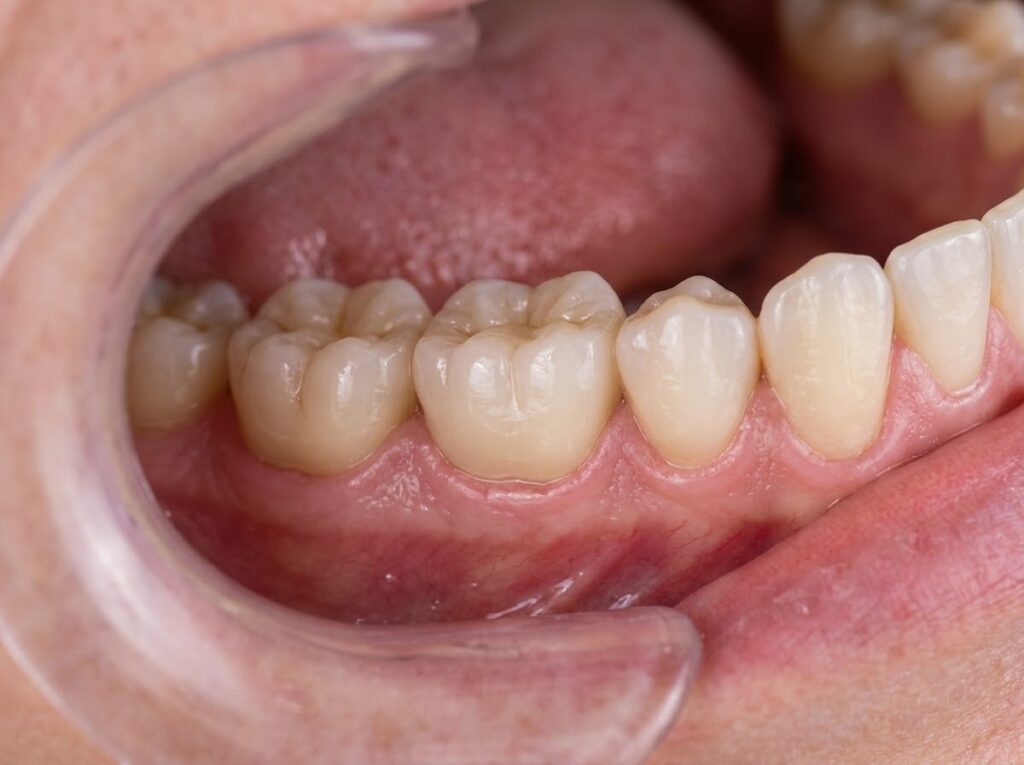
A well-made bridge is designed to match the shape and colour of your own teeth. In the smile zone, attention is given to how the pontics meet the gum so that they look as though they are emerging from it.
Small amounts can, as with any bridge. A properly contoured pontic and a daily cleaning routine keep this under control. Persistent packing should be reported, as the design can often be adjusted.
Screw-retained bridges are fastened with screws and can be removed by the dentist. Cement-retained bridges are glued over abutments and have no visible access holes. Each has indications; your dentist will explain the choice made for you.
This is generally avoided because teeth and implants respond differently to load. Bridges are normally supported entirely by implants or entirely by teeth.
Stop chewing on it and contact the clinic. A loose screw is usually simple to correct if dealt with promptly, but continued use can damage the screw or implant.
Implant placement is done under local anaesthesia; mild soreness afterwards is normal. Fitting the bridge itself is typically comfortable.
It varies. Some cases allow implants at the time of extraction; others need healing or grafting first. The final bridge is usually fitted once the implants have bonded with bone.
If you have a row of missing teeth and want to know whether an implant-supported bridge is right for you, an examination and scan will give a definite answer. At Smile Dental Clinic you can expect a comparison of all suitable options, a clear explanation of the proposed design and a written estimate. Please bring any earlier dental records and X-rays.