

Relief from Jaw Pain, Clicking
and Persistent Headaches
Temporomandibular joint disorders affect how your jaw moves, chews and rests. Careful diagnosis and conservative treatment can ease pain and restore comfortable jaw function.


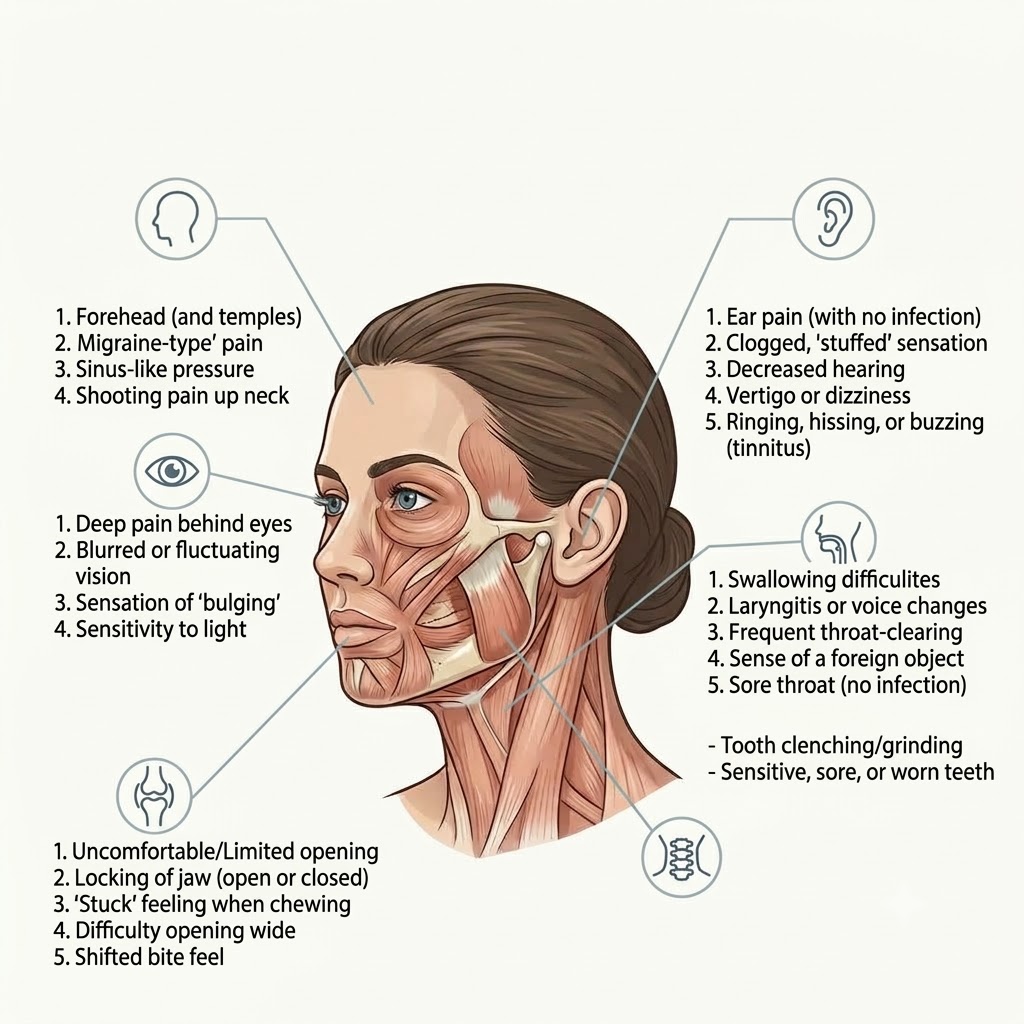
Jaw pain rarely stays in the jaw. It can travel to the temples, ears, neck and shoulders, and it often shows up as headaches that are treated for years without the real cause being found. Identifying the joint and muscle pattern behind the pain is the first step towards lasting relief.
The temporomandibular joints connect your lower jaw to the skull and work every time you speak, chew or yawn. A TMJ disorder develops when these joints, the surrounding muscles or the way your teeth meet stop working together comfortably, producing pain, restricted movement and joint noises.
TMJ assessment generally involves:
Easing muscle tension and joint strain reduces the aching that follows chewing or talking.
Many tension-type headaches around the temples settle once the jaw muscles are relieved.
Restoring smoother joint movement makes eating and speaking easier day to day.
Managing joint mechanics can reduce clicking, popping and episodes of restricted opening.
A night splint shields enamel from the wear caused by clenching and grinding.
Left untreated, TMJ problems can lead to chronic pain, tooth wear and neck strain. An early assessment by the best dentist in Indore helps identify the cause before it becomes long-standing.
Your symptom history, jaw movement and muscle tenderness are examined in detail.
Bite analysis and any imaging needed help confirm what is driving the pain.
A custom splint, jaw exercises and habit guidance relieve pressure on the joint.
Progress is reviewed and the plan adjusted so improvement is maintained long term.

Book a consultation for TMJ treatment in Indore and find out what is causing your jaw pain, clicking or headaches.
There is usually more than one cause. Common contributors include clenching and grinding, an uneven bite, jaw injury, arthritis in the joint, stress-related muscle tension and habits such as nail biting or prolonged chewing gum use.
Most TMJ care is non-invasive and comfortable. Examination, bite records and fitting a splint do not require anaesthesia. The aim throughout is to reduce your pain, not add to it.
Many patients notice improvement within a few weeks of starting splint therapy and habit changes. More established or long-standing cases can take several months of review and adjustment to stabilise.
Surgery is rarely the starting point. The large majority of TMJ problems are managed with conservative, reversible measures such as splints, physiotherapy, medication and habit control. Surgical options are considered only in specific cases that do not respond.
Yes. The joint sits directly in front of the ear and shares muscles with the temples and neck, so TMJ problems often present as earache, blocked-ear sensation, temple headaches or neck and shoulder tightness rather than obvious jaw pain.
Grinding and clenching place sustained load on the joint and muscles and can both trigger and worsen symptoms. A protective night splint is often recommended to absorb that load and limit tooth wear.
They can. Jaw clicking, mouth breathing, restricted opening or complaints of jaw ache in children are worth assessing, since growth-stage treatment can guide development and prevent longer-term problems.
Arrange an assessment if jaw pain lasts more than a couple of weeks, if your jaw locks or catches, if opening your mouth becomes difficult, or if you wake regularly with facial ache or headaches.
Still have a question about TMJ treatment? Book a consultation and our team will answer it in person.