
Dental Care for Snoring and
Obstructive Sleep Apnoea
When the airway narrows during sleep, breathing is disturbed night after night. A custom oral appliance can help hold the airway open — a comfortable option for many patients who struggle with CPAP.
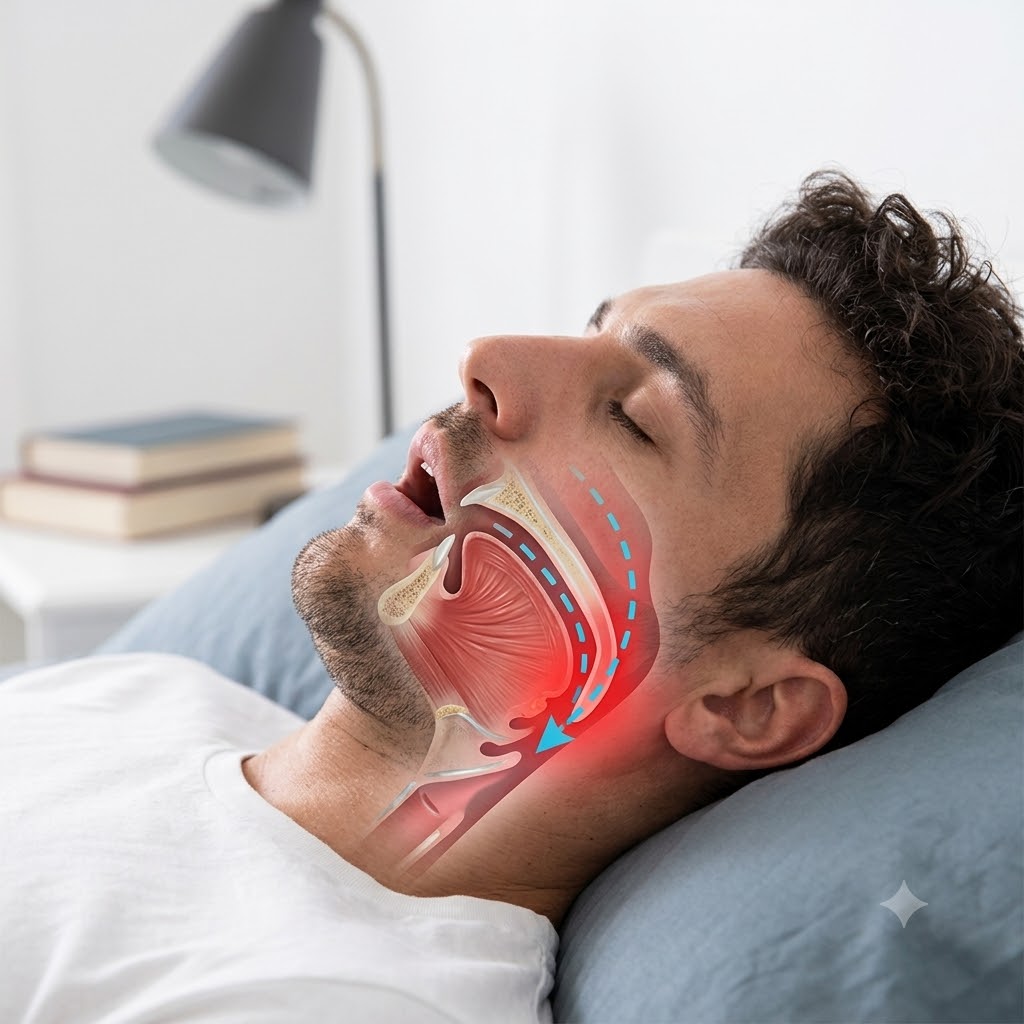
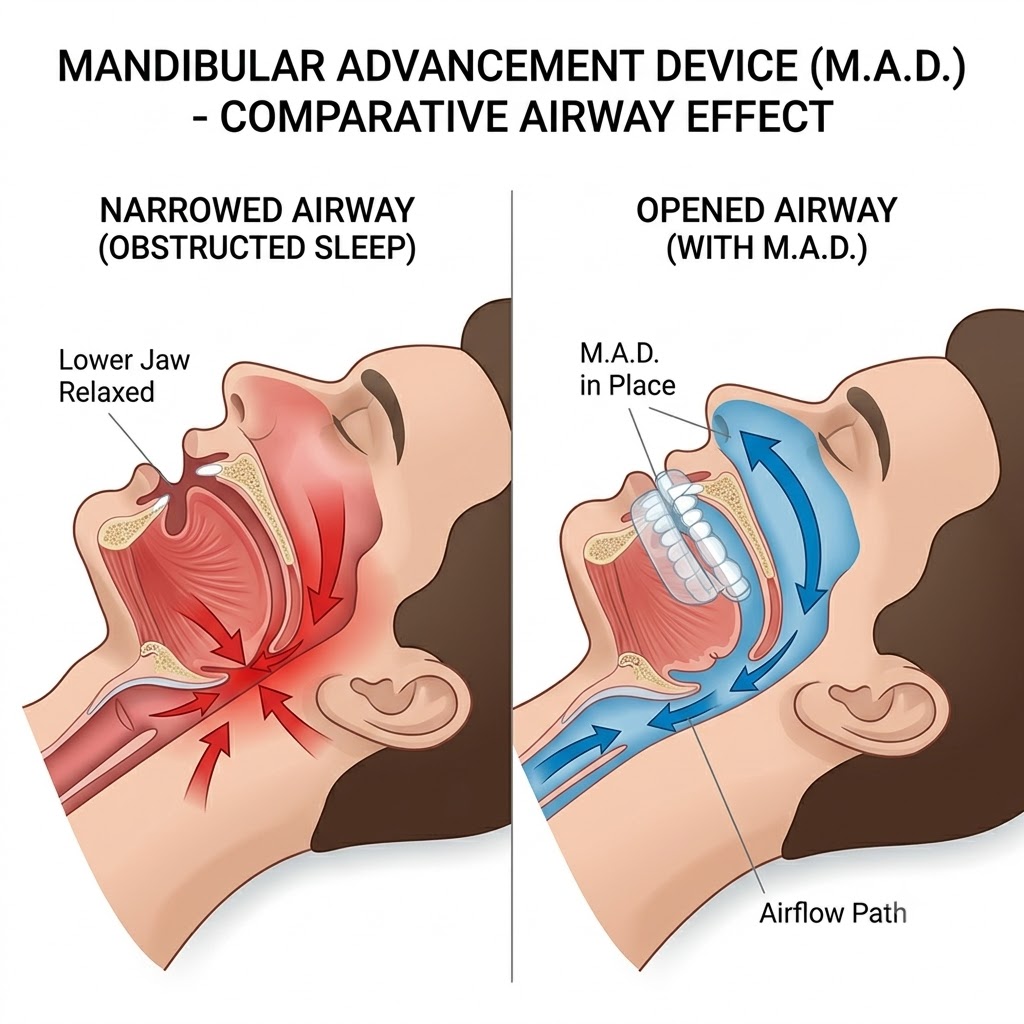
Loud snoring and daytime exhaustion are often dismissed as normal. They can be signs that the airway is collapsing during sleep. Dentistry contributes a well-established treatment here: a custom-made appliance that holds the lower jaw and tongue forward so the airway stays open.
During sleep the muscles of the throat relax. In some people the airway narrows enough to vibrate, producing snoring, or closes repeatedly, interrupting breathing — obstructive sleep apnoea. Sleep disorder dentistry treats these airway problems with oral appliance therapy, working alongside the physician who makes the diagnosis.
Oral appliance therapy involves:
Holding the airway open reduces the vibration that causes snoring, for you and your partner.
Fewer breathing interruptions mean less fragmented sleep and less daytime drowsiness.
The appliance is small, silent and needs no power, which makes travel straightforward.
Made from your own dental impressions, so it seats securely without irritating the gums.
Findings are shared with your physician so dental and medical treatment stay aligned.
Obstructive sleep apnoea is diagnosed by a physician using a sleep study, not by a dental examination. If screening suggests a risk, the best dentist in Indore will refer you for testing before any appliance is made.
Your sleep history, symptoms, airway and jaw position are reviewed together.
You are referred for a sleep test so a physician can confirm the diagnosis and severity.
Impressions are taken and a custom appliance is made and fitted to your bite.
The appliance is adjusted over follow-up visits and results confirmed with your physician.
Book a consultation for sleep disorder dentistry in Indore and find out whether an oral appliance could help you sleep and breathe better.
It is a condition in which the airway repeatedly narrows or closes during sleep, briefly stopping breathing. Each episode disturbs sleep, often without the person realising, which is why exhaustion during the day is such a common first clue.
No. A dentist can screen for risk factors and recognise oral signs, but the diagnosis must be made by a physician on the basis of a sleep study. Dentistry then contributes the treatment side through oral appliance therapy.
It fits over the teeth like a sports guard and holds the lower jaw slightly forward during sleep. That position brings the tongue and soft tissues forward too, keeping the airway open so breathing is less obstructed.
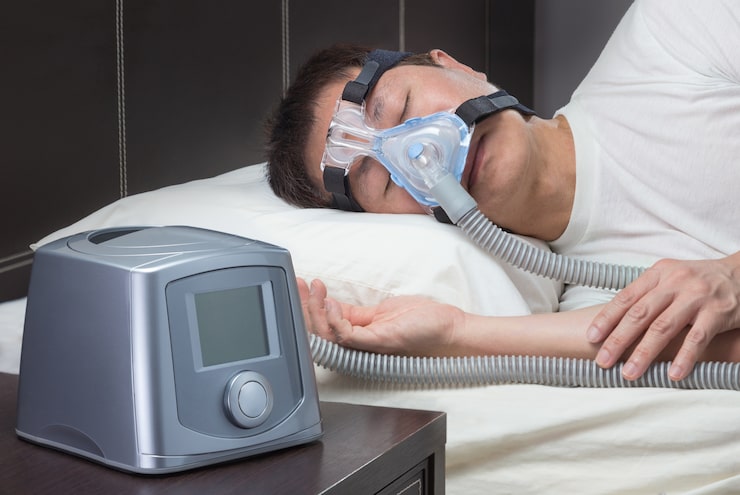
Oral appliances are a recognised option for snoring and for mild to moderate sleep apnoea, and for people with severe apnoea who cannot tolerate CPAP. CPAP remains the more effective treatment for severe cases, so the choice is made with your physician.
Most people adapt within one to two weeks. Mild jaw tightness, extra saliva or tooth tenderness in the mornings is common early on and usually settles. Adjustments at review visits improve comfort further.
Yes, it matters. A sleep study establishes whether apnoea is present and how severe it is. Treating snoring with an appliance without testing risks masking a more serious condition that needs medical management.
No. Many people snore without having apnoea. Snoring combined with witnessed pauses in breathing, choking or gasping at night, or heavy daytime sleepiness is the pattern that should prompt testing.
The two often appear together. Night-time grinding, jaw ache and morning headaches are reported by many patients with disturbed breathing, so the jaw joint is assessed before an appliance is fitted and monitored throughout treatment.
Still have a question about sleep disorder dentistry? Book a consultation and our team will answer it in person.