
Home » Braces in Indore
Care led by Dr. Satyajit Tekade
See how your teeth will move
Precise records, no extra trips
Metal, ceramic and self-ligating
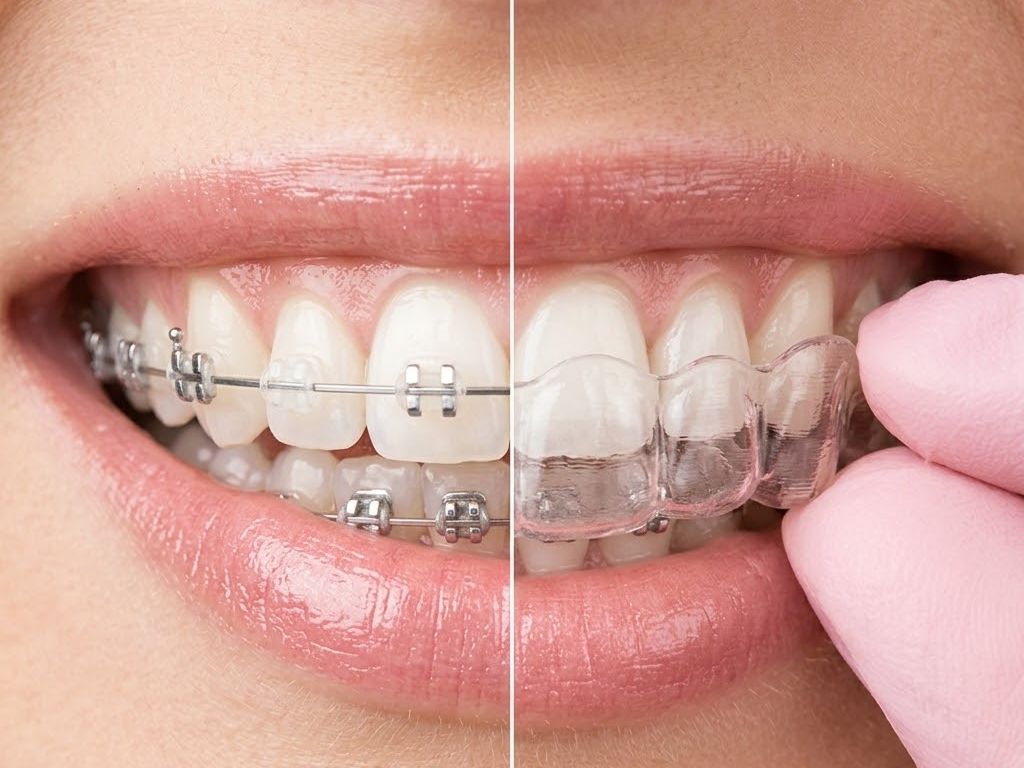
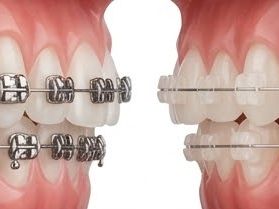
Braces are fixed orthodontic appliances that apply gentle, steady pressure to move teeth into healthier positions over time. They correct crowding, spacing, crooked teeth and bite problems that affect how you smile, chew, speak and clean your teeth.
Small anchors bonded to each tooth.
Guides the direction of movement.
Elastics and wire changes each visit.
Many alignment and bite problems develop slowly, so they are easy to overlook. If any of these sound familiar, an orthodontic check-up can tell you whether braces would help.
Teeth that twist or overlap are harder to clean and wear unevenly.
Spaces can trap food, strain the gums and affect your smile.
When the jaws do not meet correctly, teeth and joints take extra load.
A misaligned bite can make biting, chewing and some sounds harder.
Clicking, soreness or tired jaw muscles can signal a bite imbalance.
Regular accidental bites often point to teeth that are out of line.
Types of braces
Every case is different. After your records are taken, we explain which option will work best for your teeth, your routine and your budget.
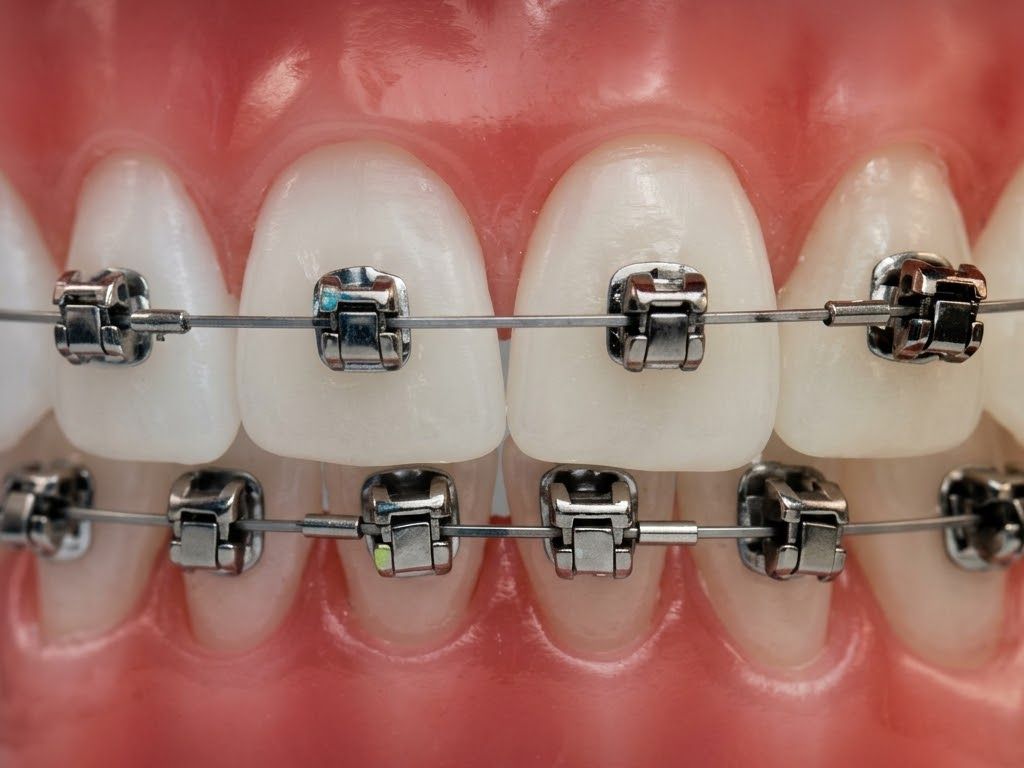
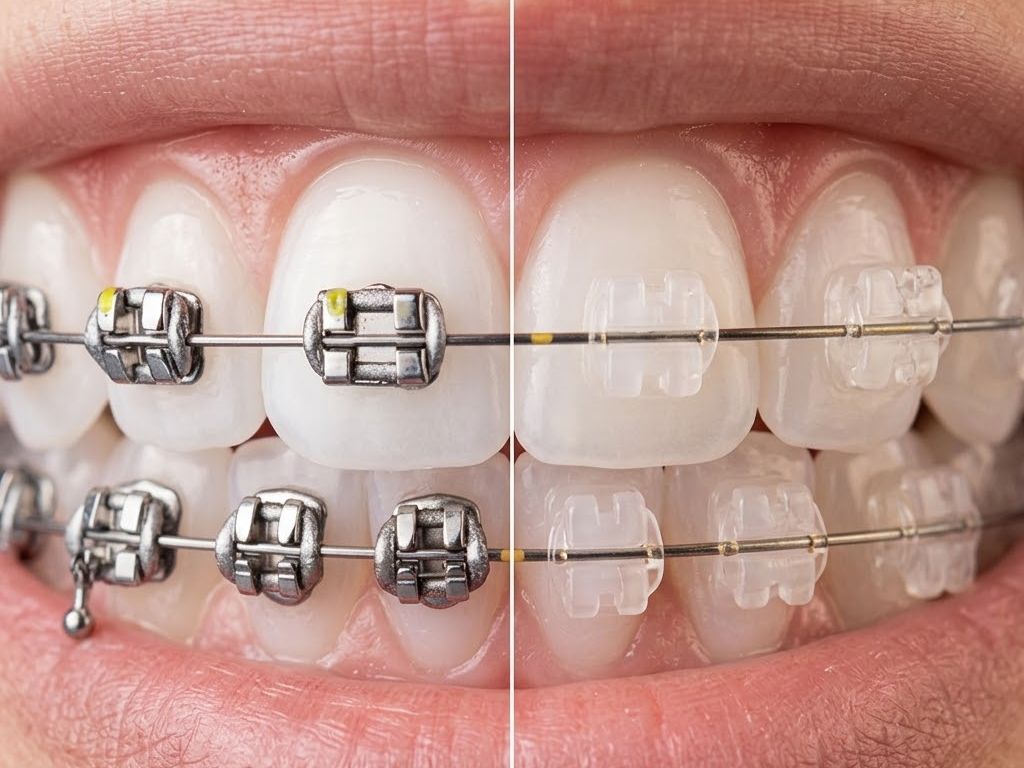
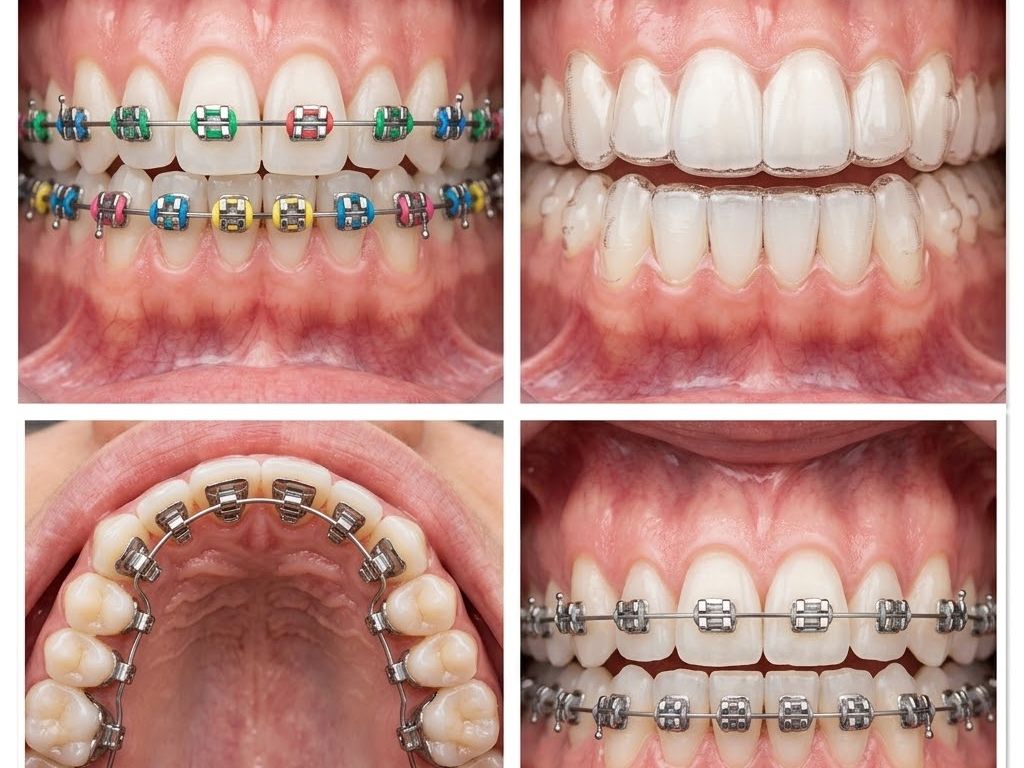
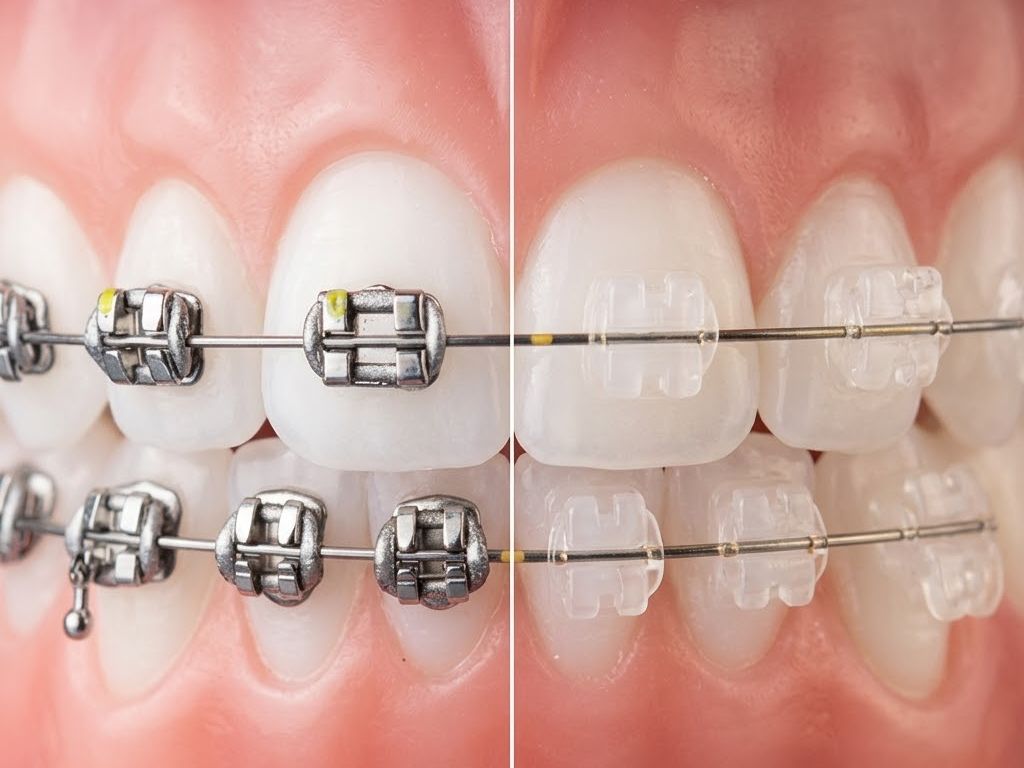
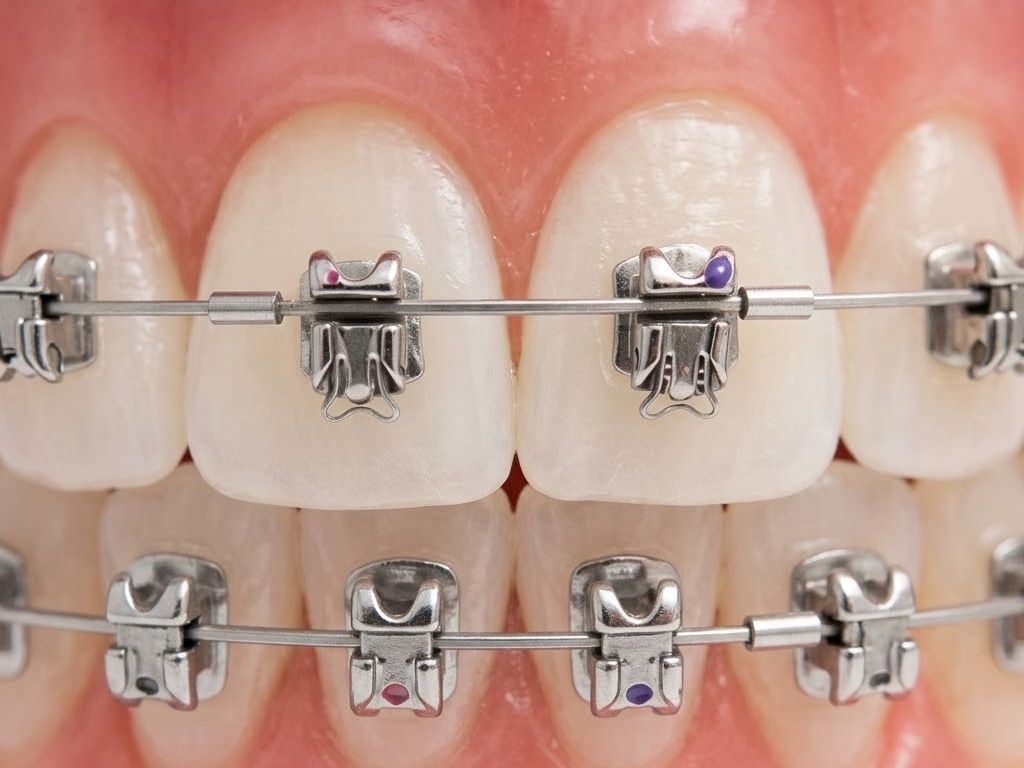
Stainless steel brackets bonded to each tooth and linked by a thin archwire. The most time-tested and economical way to straighten teeth, and strong enough for complex corrections.
Coloured elastic ties let younger patients personalise their braces at every visit.
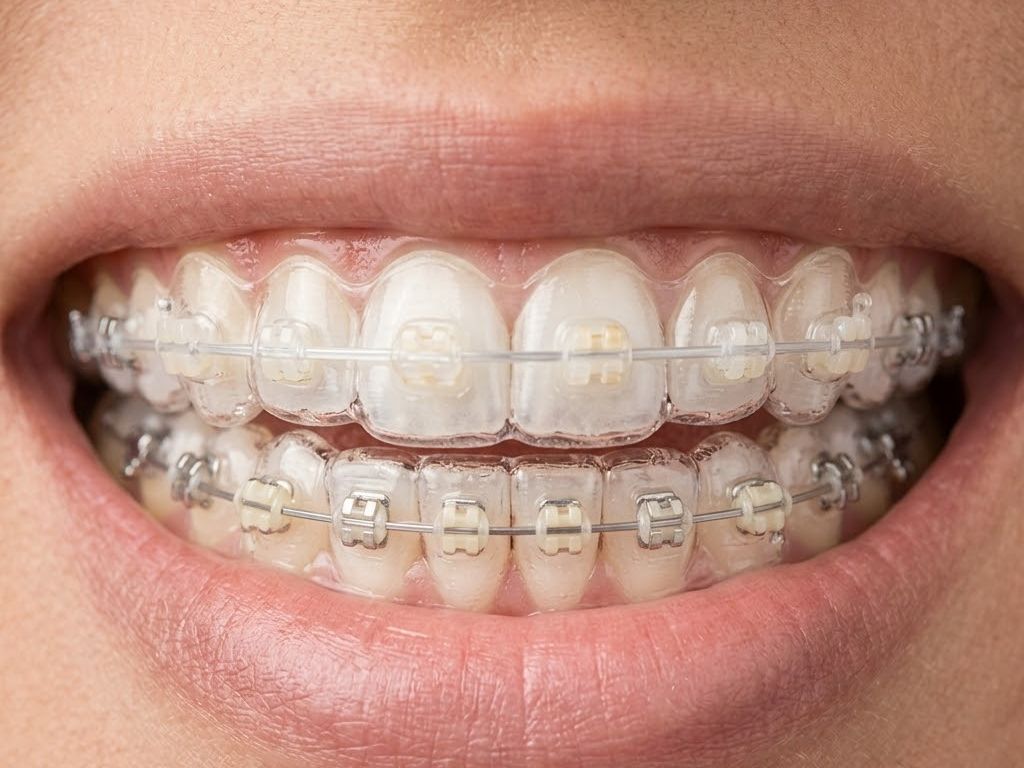
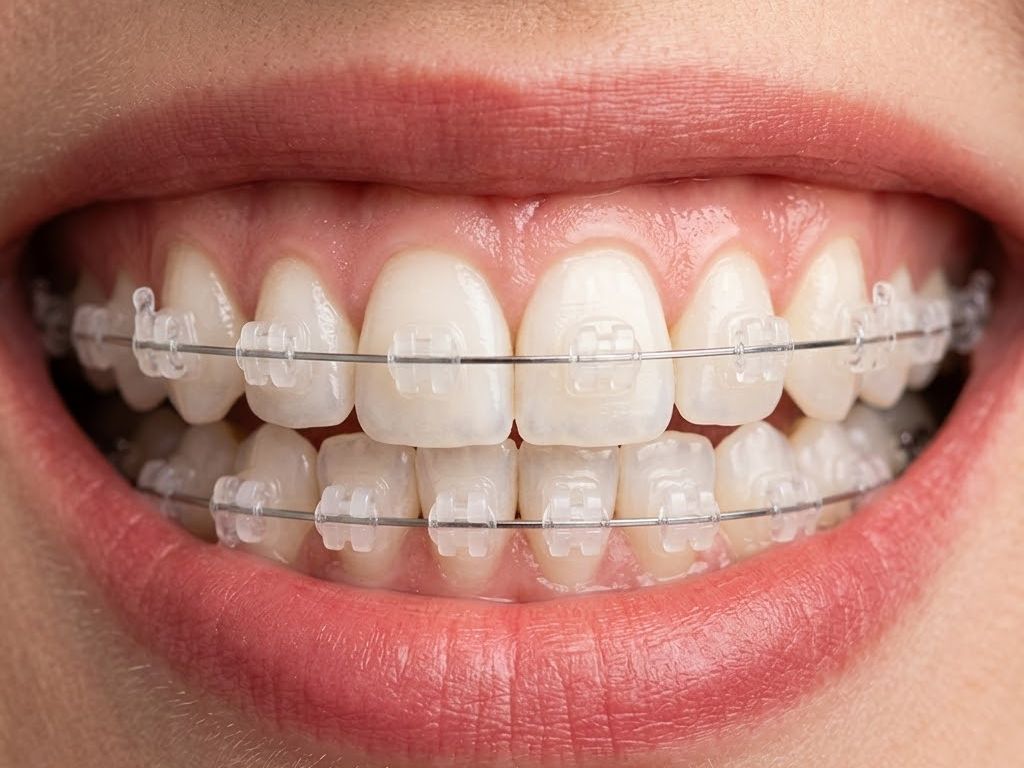
Tooth-coloured ceramic brackets that blend with your natural teeth. They work just like metal braces but are far less noticeable in photos and conversation.
Ceramic brackets need a little extra care to avoid staining from tea, coffee and turmeric.
Brackets with a built-in clip that holds the archwire, so no elastic ties are needed. Lower friction means cleaner brackets and often fewer, quicker adjustment visits.
Your orthodontist will confirm during planning whether self-ligating brackets suit your case.
All three systems move teeth effectively. The differences lie in how they look, how they feel day to day and how often you visit.
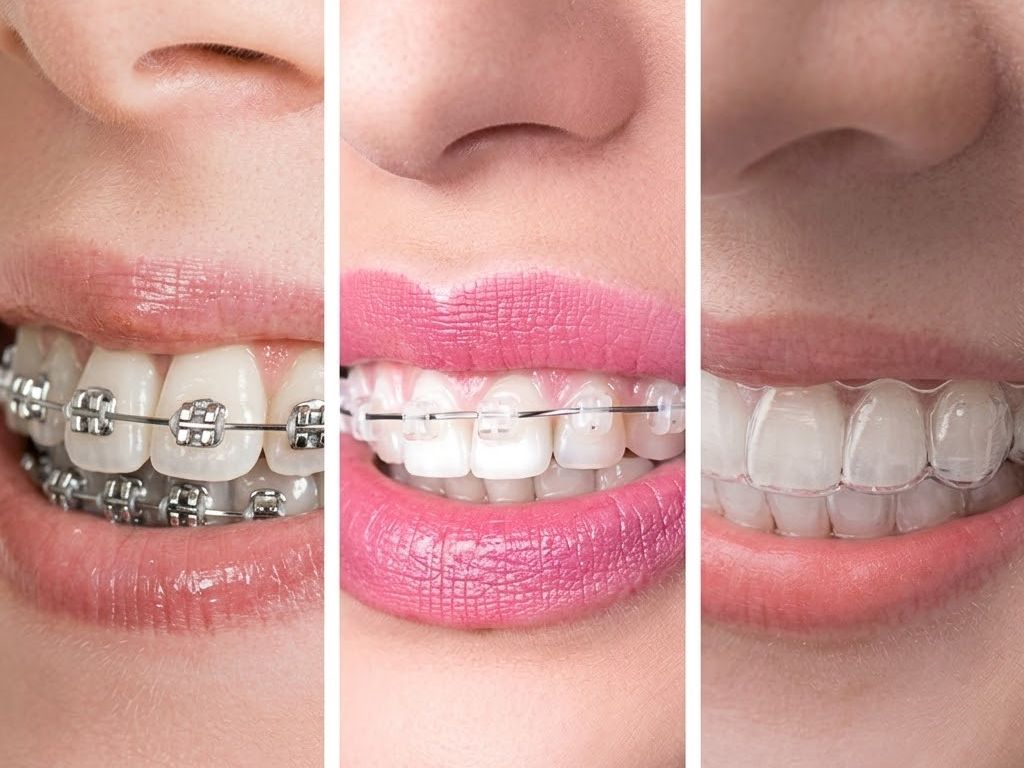
| Metal | Ceramic | Self-ligating | |
|---|---|---|---|
| Appearance | Visible silver brackets | Tooth-coloured, discreet | Metal or clear, no elastic ties |
| Comfort | Mild pressure after adjustments | Smooth, slightly larger brackets | Lower friction, gentle forces |
| Cleaning | Elastic ties can hold food | Needs care to avoid stains | Easier with no elastic ties |
| Visits | Every 4 to 6 weeks | Every 4 to 6 weeks | Often spaced further apart |
| Cost | Most economical | Moderate | Moderate to higher |
| Ideal for | Complex corrections, all ages | Appearance-conscious teens and adults | Fewer visits, easier hygiene |
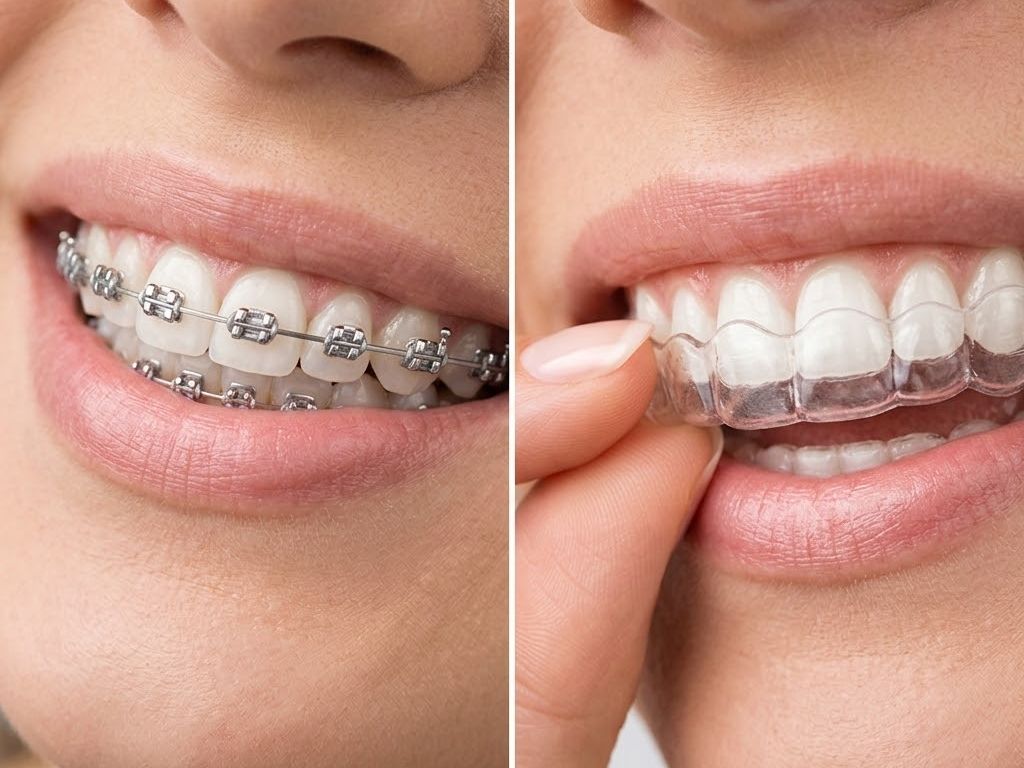
Both straighten teeth. The right choice depends on the complexity of your case and how you prefer to live with your treatment.
Meet your orthodontist
Director, M.D.S., Ph.D.
Fellowship in Clinical Orthodontics & Implantologist
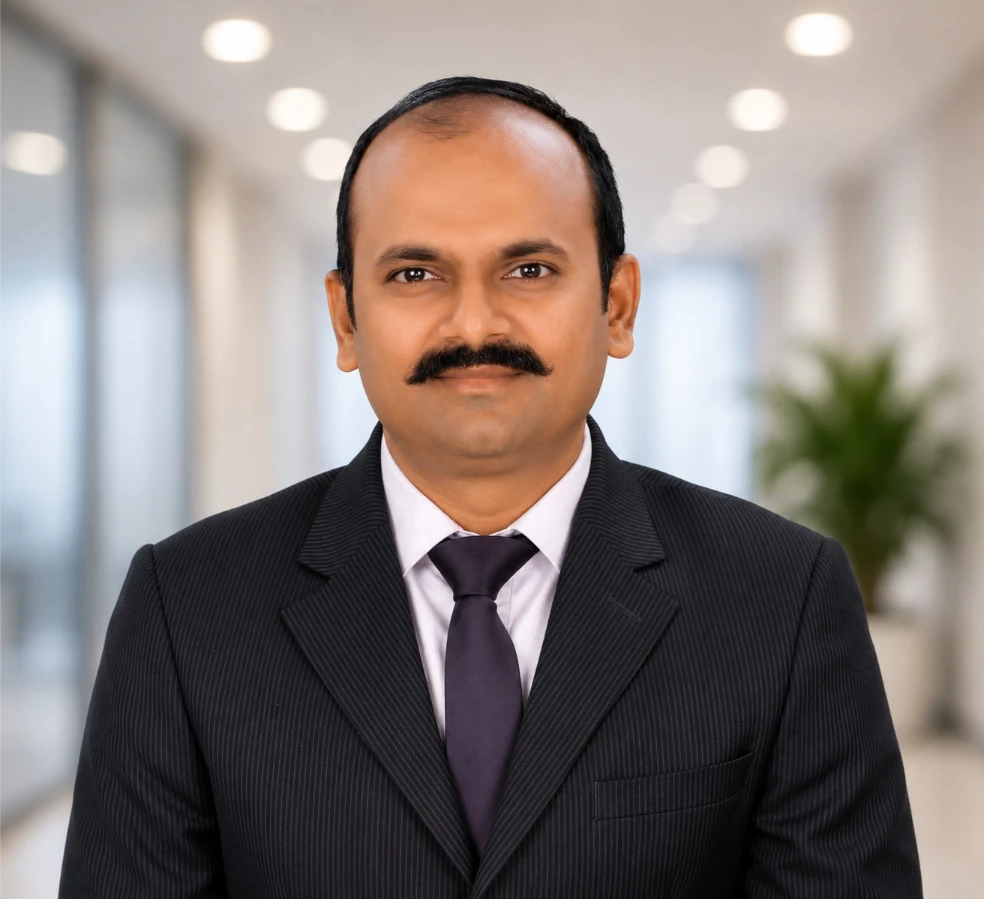
Dr. Satyajit Tekade leads orthodontic care at Smile Dental Clinic. He plans each braces treatment around your diagnostic records, bite and goals, and guides your progress from the first fitting through to retention.
From the first scan to your final retainer, every stage is planned, explained and monitored so you always know what comes next.
We examine your teeth, bite and jaw, talk through your goals and use digital scans to plan how each tooth will move.
X-rays, photographs and scans, with in-house CBCT when needed, give a precise picture of your teeth, roots and jaws.
Together we choose metal, ceramic or self-ligating braces for your case and lifestyle, with a clear estimate before you begin.
Brackets are bonded and the archwire placed in one comfortable visit. We show you exactly how to clean and care for your braces.
Visits every four to six weeks let us adjust wires, check movement and keep your treatment on schedule.
When your braces come off, custom retainers hold your teeth in their new positions and protect your result for years.
Clear answers to what patients ask us most. Still unsure about something? Our team is happy to talk it through.
Call us or book a visit and we will answer your questions in person.
Most braces treatments take between 12 and 24 months. The exact time depends on how much your teeth need to move, the type of braces, your age and how closely you follow the plan. You will get an estimated timeline after your assessment.
Fitting braces is not painful. Mild soreness or pressure is normal for three to five days after placement and for a day or two after each adjustment as teeth start moving. Soft foods and the pain relief your dentist recommends keep this very manageable.
Braces are most often started between ages 12 and 14, once most permanent teeth are in. An orthodontic check-up around age 7 can catch developing bite problems early. There is no upper age limit: adults can be treated successfully as long as the gums and bone are healthy.
Cost depends on the type of braces (metal, ceramic or self-ligating), the complexity of your case and the expected duration. We share a clear, itemised estimate after your consultation and diagnostic records, before any treatment begins.
It depends on your bite, how much movement is needed, how visible you are comfortable with your braces being, and your budget. After examining your records, we recommend the option that will give you the best result and explain the trade-offs.
Both work on the same principle. Metal braces use stainless steel brackets and are the most economical and hard-wearing. Ceramic braces use tooth-coloured brackets that blend with your teeth, but cost more and need a little extra care to avoid staining.
Most patients are seen every four to six weeks so the archwire and elastics can be adjusted as the teeth move. These visits are short, but keeping them on schedule matters, because missed appointments are one of the most common reasons treatment takes longer.
Avoid hard and sticky foods that can break brackets or bend wires: nuts, hard chikki, ice, chewing gum, toffees, and whole apples or corn on the cob. Cut firm fruits and vegetables into small pieces, and brush after sweet or sticky food.
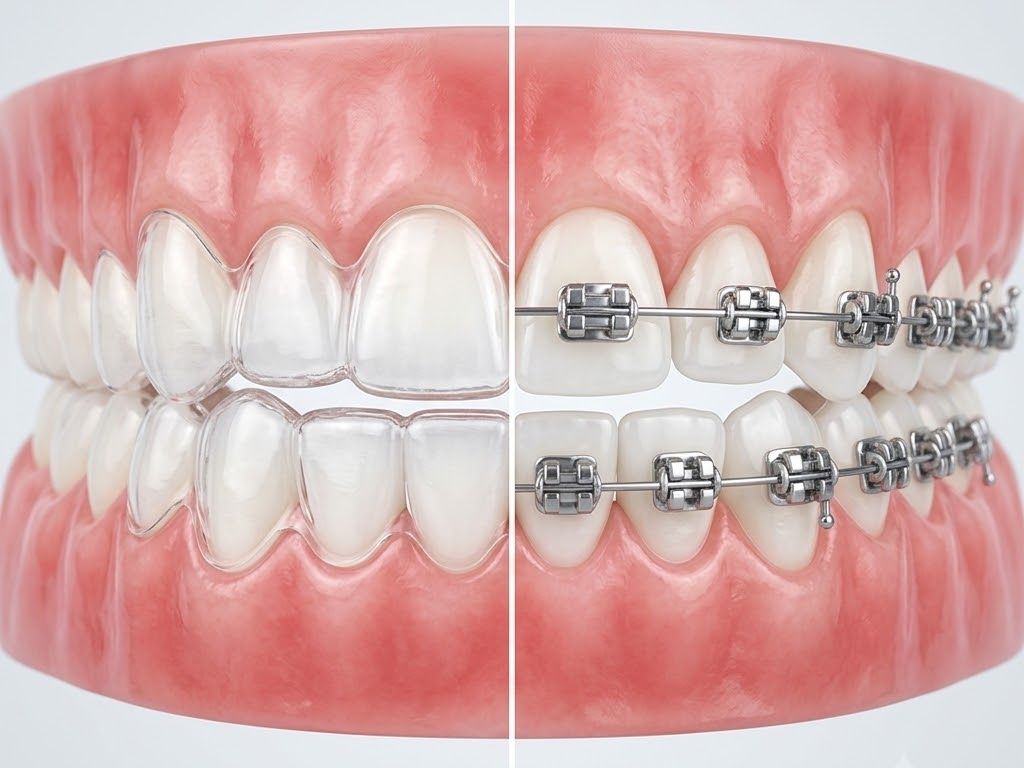
Braces are fixed and handle complex movements without relying on wear time. Clear aligners are removable and nearly invisible, but must be worn 20 to 22 hours a day. We will tell you honestly which option suits your case after your assessment.
Yes. Teeth naturally tend to drift back once braces come off. Retainers hold the result in place while the bone and gums settle. Wearing them exactly as advised is the most important thing you can do to protect your new smile.
Book your braces consultation in Indore. We will examine your bite, show you your options and give you a clear plan and estimate.