
Orthodontic treatment is not limited to children and teenagers. Adults can also benefit from straightening their teeth and correcting bite problems. Whether teeth are crowded, spaced unevenly, or do not meet properly, orthodontic care may improve dental function, oral hygiene, and smile appearance. The right approach depends on individual dental health and treatment goals.
Why Do Adults Need Orthodontic Treatment?
Adults may consider orthodontic treatment for several reasons. Crooked or overlapping teeth can make brushing and flossing difficult, allowing plaque to accumulate. Bite problems may also contribute to uneven tooth wear, chewing difficulties, or speech concerns.
Some adults develop alignment changes over time, even if they previously had straight teeth. Others choose treatment to address concerns that were not corrected during childhood.
What Are The Benefits Of Adult Orthodontics?
Orthodontic treatment can offer both functional and cosmetic benefits when recommended appropriately.
- Improved oral hygiene: Better-aligned teeth may be easier to brush and floss effectively.
- Better bite alignment: Correcting certain bite problems can improve how the upper and lower teeth meet during chewing.
- Reduced uneven tooth wear: Appropriate alignment may help distribute biting forces more evenly.
- Improved smile appearance: Treatment can reduce visible crowding, gaps, and other alignment concerns.
- Greater confidence: Some adults feel more comfortable smiling after addressing concerns about their teeth.
However, orthodontic treatment does not automatically prevent every dental problem. Regular dental check-ups and good oral hygiene remain essential.
What Orthodontic Options Are Available For Adults?
Adults may have several treatment options depending on the complexity of their alignment concerns.
Traditional Braces
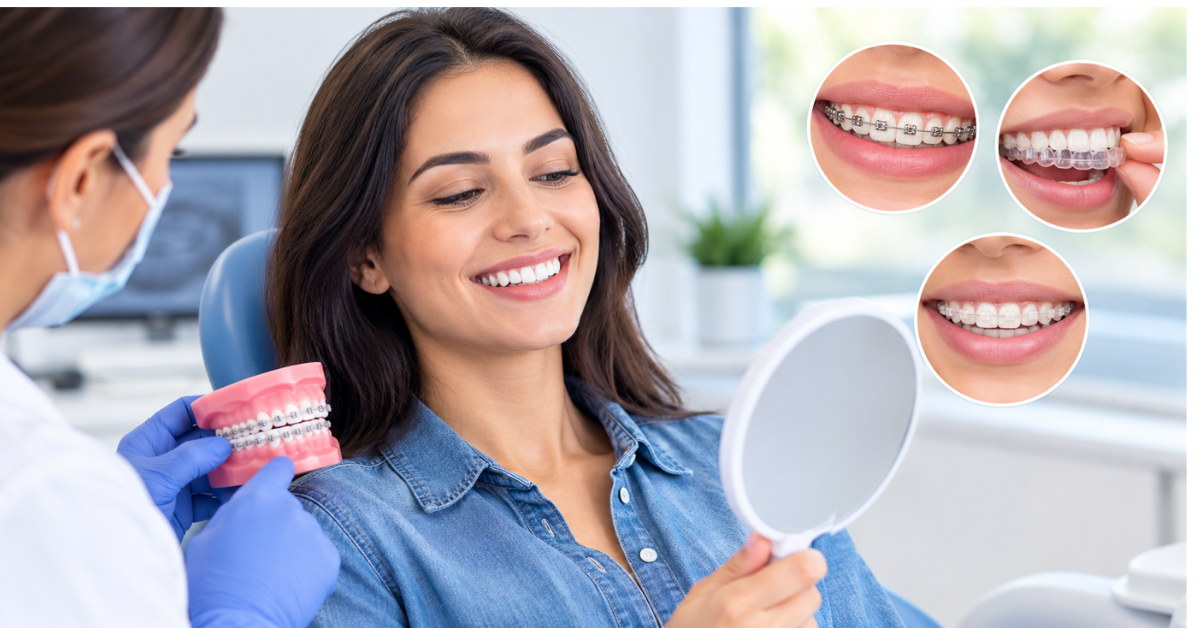
Metal or tooth-coloured braces use brackets and wires to gradually move teeth into planned positions. They can treat many alignment and bite problems.
Clear Aligners
Clear aligners are removable trays that gradually move teeth. They may suit selected cases, but their effectiveness depends on the dental problem and consistent use as directed.
Other Braces Options
Some patients may be suitable for ceramic braces or braces placed behind the teeth. A dental professional can explain the advantages, limitations, costs, and suitability of each option.
What Should Adults Consider Before Starting Treatment?
Healthy teeth and gums are important before orthodontic treatment begins. Cavities and active gum disease may need attention first. Your dentist or orthodontist will assess your bite, tooth alignment, gum health, and dental history before recommending a plan.
Treatment duration varies according to the complexity of the case. Adults should also understand that braces may cause temporary discomfort and require careful cleaning, regular appointments, and retainers after treatment to help maintain results.
If you are considering Braces Treatment in Indore, a dental consultation can help determine whether orthodontic treatment is appropriate for your needs and which options may suit your oral health and lifestyle.
FAQs
1. Is there an age limit for orthodontic treatment?
There is no fixed upper age limit. Adults can undergo treatment when their teeth and supporting gums are healthy enough, although individual dental conditions may affect suitability.
2. Do braces work for adults as effectively as for teenagers?
Braces can successfully correct many alignment problems in adults. Treatment time and complexity vary depending on tooth position, bone health, gum condition, and the type of correction required.
3. Are clear aligners better than traditional braces?
Neither option is best for everyone. Clear aligners may suit selected cases, while traditional braces can address a wider range of complex tooth movements. A professional assessment helps determine the appropriate choice.
4. How long does adult orthodontic treatment take?
Treatment may take several months to a few years, depending on the complexity of the problem and the treatment plan. Your orthodontist can provide an individual estimate after an examination.
5. Do adults need retainers after braces?
Yes. Teeth can gradually shift after orthodontic treatment. Wearing retainers as instructed helps maintain alignment and supports long-term treatment stability.